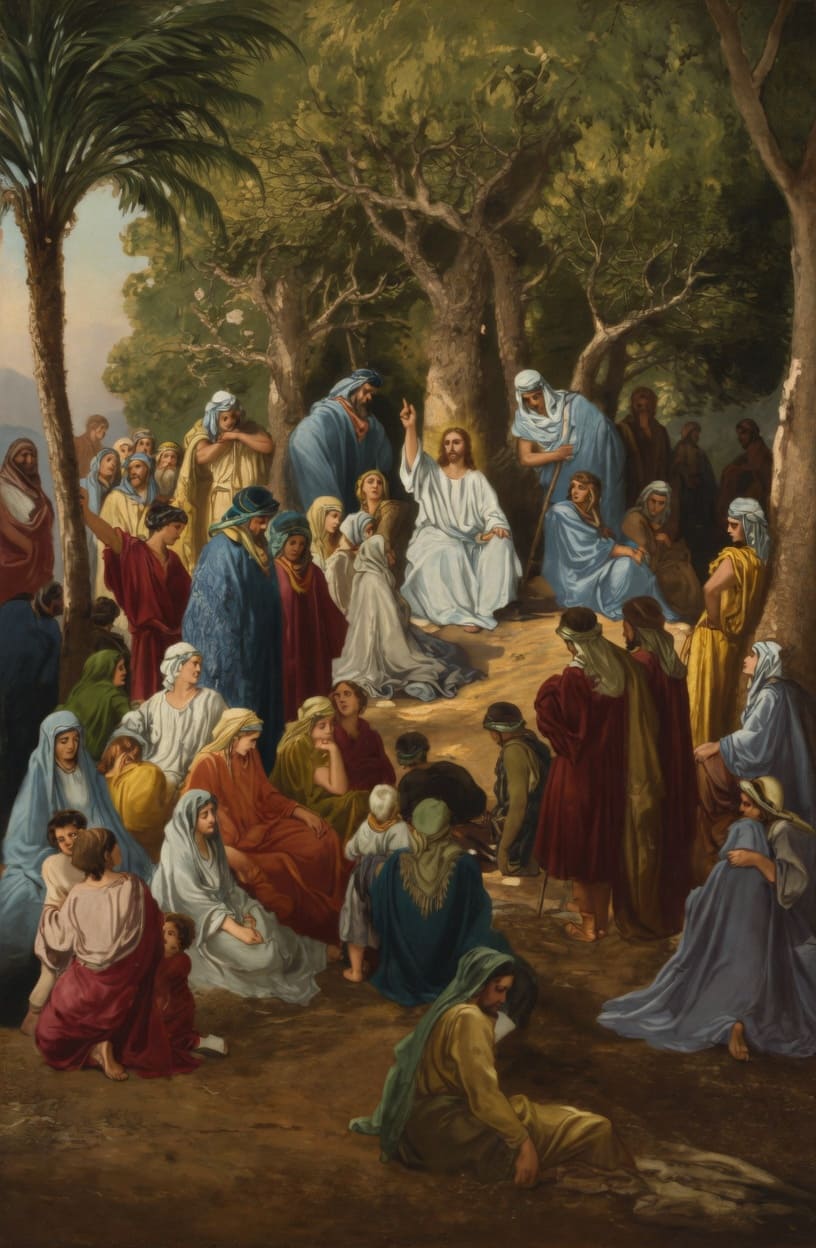
The Sermon On The Mount. “He opened His mouth, and taught them, saying, Blessed.” Matt. 5:2, 3.
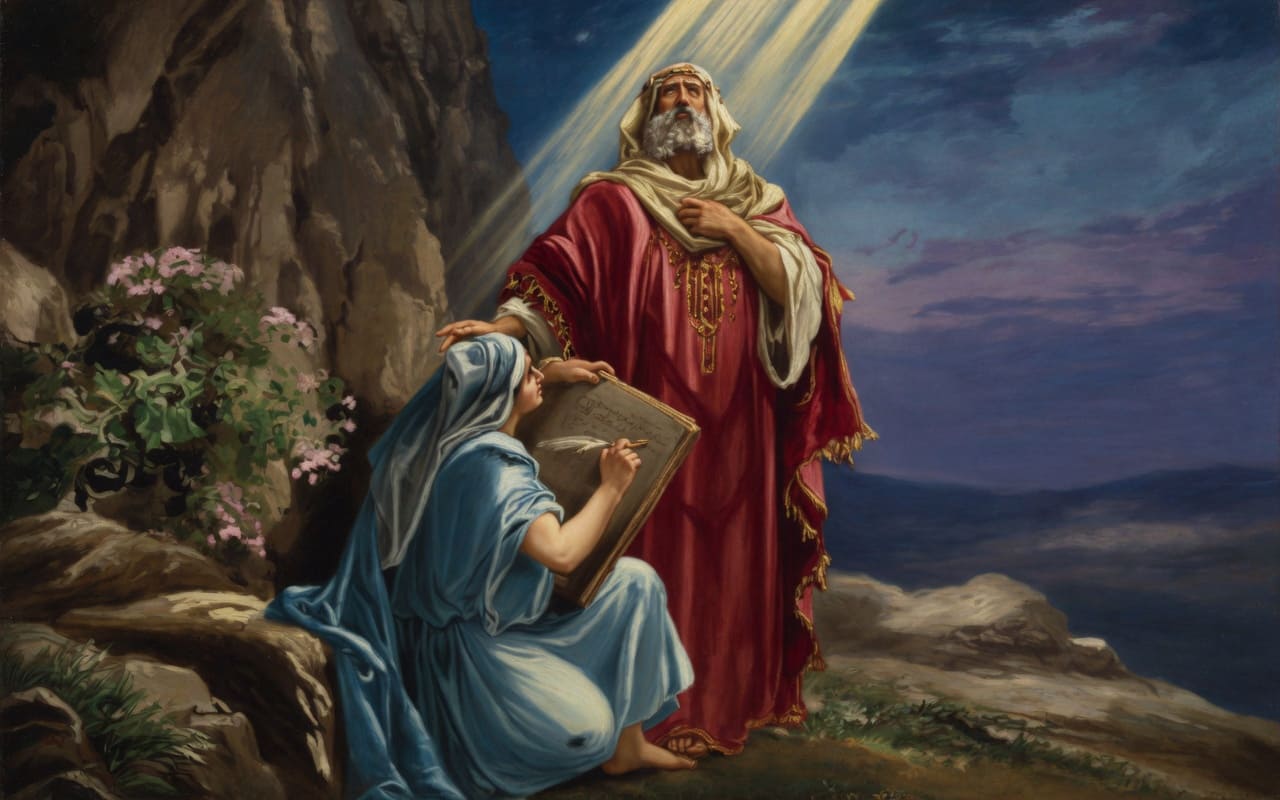
Baruch Writing The Prophecies Of Jeremiah. “All scripture is given by inspiration of God.” 2 Tim. 3:16.
The Scriptures
1. By what name are the sacred writings of the Bible commonly known?
“Jesus saith unto them, Did ye never read in the Scriptures, The stone which the builders rejected, the same is become the head of the corner?” Matt. 21:42.
2. What other title is given this revelation of God to man?
“And He answered and said unto them, My mother and My brethren are these which hear the word of God, and do it.” Luke 8:21.
3. How were the Scriptures given?
“All scripture is given by inspiration of God.” 2 Tim. 3:16.
4. By whom were the men directed who thus spoke for God?
“For the prophecy came not in old time by the will of man: but holy men of God spake as they were moved by the Holy Ghost.” 2 Peter 1:21.
5. What specific instance is mentioned by Peter?
“Men and brethren, this scripture must needs have been fulfilled, which the Holy Ghost by the mouth of David spake before concerning Judas, which was guide to them that took Jesus.” Acts 1:16.
6. How does David express this same truth?
“The Spirit of the Lord spake by me, and His word was in my tongue.” 2 Sam. 23:2.
7. Who, therefore, did the speaking through these men?
“God, who at sundry times and in divers manners spake in time past unto the fathers by the prophets.” Heb. 1:1.
8. For what purpose were the Scriptures written?
“For whatsoever things were written aforetime were written for our learning, that we through patience and comfort of the Scriptures might have hope.” Rom. 15:4.
9. For what is all scripture profitable?
“All scripture is given by inspiration of God, and is profitable for doctrine, for reproof, for correction, for instruction in righteousness.” 2 Tim. 3:16.
10. What was God’s design in thus giving the Scriptures?
“That the man of God may be perfect, thoroughly furnished unto all good works.” Verse 17.
11. What estimate did Job place upon the words of God?
“Neither have I gone back from the commandment of His lips; I have esteemed the words of His mouth more than my necessary food.” Job 23:12.
12. Upon what evidence did Jesus base His Messiahship?
“And beginning at Moses and all the prophets, He expounded unto them in all the scriptures the things concerning Himself.” Luke 24:27.
13. What three general divisions did Jesus recognize as including all the writings of the Old Testament?
“And He said unto them, These are the words which I spake unto you, while I was yet with you, that all things must be fulfilled, which were written in the law of Moses, and in the prophets, and in the Psalms, concerning Me.” Verse 44.
14. What does God’s character preclude Him from doing?
“In hope of eternal life, which God, that cannot lie, promised before the world began.” Titus 1:2.
15. What is God called in the Scriptures?
“He is the Rock, His work is perfect: for all His ways are judgment: a God of truth and without iniquity, just and right is He.” Deut. 32:4.
16. What, therefore, must be the character of His word?
“Sanctify them through Thy truth: Thy word is truth.” John 17:17.
17. What test should therefore be applied to every professed teacher of truth?
“To the law and to the testimony: if they speak not according to this word, it is because there is no light in them.” Isa. 8:20.
18. What does God design that His word shall be to us in this world of darkness, sin, and death?
“Thy word is a lamp unto my feet, and a light unto my path.” Ps. 119:105.
19. To what extent has God magnified His word?
“Thou hast magnified Thy word above all Thy name.” Ps. 138:2.
20. In what is the true poetry of life to be found?
“Thy statutes have been my songs in the house of my pilgrimage.” Ps. 119:54.
21. How long will the word of God endure?
“The grass withereth, the flower fadeth: but the word of our God shall stand forever.” Isa. 40:8. “Heaven and earth shall pass away, but My words shall not pass away.” Matt. 24:35.
The Study Of The Scriptures
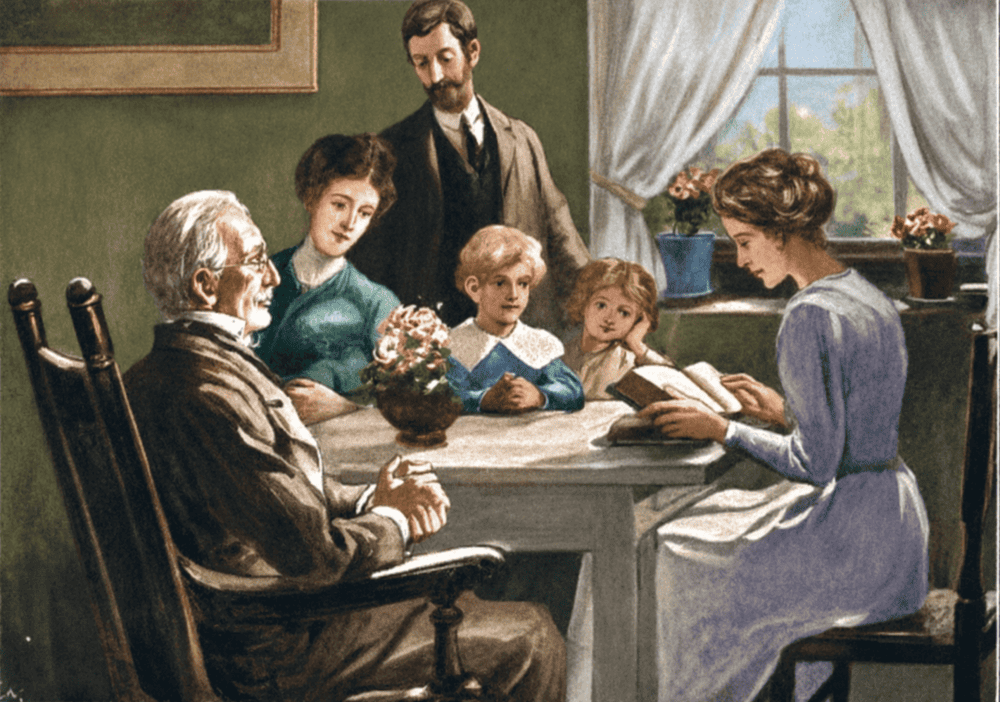
Searching The Scriptures. “Study to show thyself approved unto God.” 2 Tim. 2:15.
1. What did Christ say to the Jews concerning the study of the Scriptures?
“Search the Scriptures; for in them ye think ye have eternal life: and they are they which testify of Me.” John 5:39.
2. For what were the Bereans commended?
“These were more noble than those in Thessalonica, in that they received the word with all readiness of mind, and searched the Scriptures daily, whether those things were so.” Acts 17:11.
NOTE.—“If God’s Word were studied as it should be,” says a modern Bible student, “men would have a breadth of mind, a nobility of character, and a stability of purpose that are rarely seen in these times. But there is little benefit derived from a hasty reading of the Scriptures. One may read the whole Bible through, and yet fail to see its beauty or comprehend its deep and hidden meaning. One passage studied until its significance is clear to the mind and its relation to the plan of salvation is evident, is of more value than the perusal of many chapters with no definite purpose in view, and no positive instruction gained.”
3. By what comparison is it indicated that some portions of God’s Word are more difficult to understand than others?
“For when for the time ye ought to be teachers, ye have need that one teach you again which be the first principles of the oracles of God; and are become such as have need of milk, and not of strong meat.” Heb. 5:12
4. In what way is this comparison further explained?
“For every one that useth milk is unskilful in the word of righteousness: for he is a babe. But strong meat belongeth to them that are of full age, even those who by reason of use have their senses exercised to discern both good and evil.” Verses 13, 14.
5. What writings are specifically mentioned as containing some things difficult to understand?
“And account that the long-suffering of our Lord is salvation; even as our beloved brother Paul also according to the wisdom given unto him hath written unto you; as also in all his epistles, speaking in them of these things; in which are some things hard to be understood, which they that are unlearned and unstable wrest, as they do also the other scriptures, unto their own destruction.” 2 Peter 3:15, 16.
NOTE.—Some scriptures are too plain to be misunderstood, while the meaning of others cannot so readily be discerned. To obtain a comprehensive knowledge of any Bible truth, scripture must be compared with scripture, and there should be “careful research and prayerful reflection.” But all such study will be richly rewarded.
6. Who alone comprehends the things of God?
“For what man knoweth the things of a man, save the spirit of man which is in him? even so the things of God knoweth no man, but the Spirit of God.” 1 Cor. 2:11.
7. How thoroughly does the Spirit search out the hidden treasures of truth?
“But God hath revealed them unto us by His Spirit: for the Spirit searcheth all things, yea, the deep things of God.” Verse 10.
8. What is one purpose for which the Holy Spirit was sent?
“But the Comforter, which is the Holy Ghost, whom the Father will send in my name, He shall teach you all things, and bring all things to your remembrance, whatsoever I have said unto you.” John 14:26.
9. Why cannot the natural man receive the things of the Spirit?
“But the natural man receiveth not the things of the Spirit of God: for they are foolishness unto him: neither can he know them, because they are spiritually discerned.” 1 Cor. 2:14.
10. For what spiritual enlightenment should every man pray?
“Open Thou mine eyes, that I may behold wondrous things out of Thy law.” Ps. 119:18.
11. For what spiritual gift did the apostle Paul pray?
“That the God of our Lord Jesus Christ, the Father of glory, may give unto you the spirit of wisdom and revelation in the knowledge of Him.” Eph. 1:17.
12. Upon what conditions is an understanding of divine things promised?
“Yea, if thou criest after knowledge, and liftest up thy voice for understanding; if thou seekest her as silver, and searchest for her as for hid treasures; then shalt thou understand the fear of the Lord, and find the knowledge of God.” Prov. 2:3-5.
13. What great blessing did Christ confer upon His disciples?
“Then opened He their understanding, that they might understand the Scriptures.” Luke 24:45.
14. What beings of a higher order than man desire to look into?
“Which things the angels desire to look into.” 1 Peter 1:12
15. What is promised him who wills to do God’s will?
“If any man will [willeth to, R. V.] do His will, he shall know of the doctrine, whether it be of God, or whether I speak of Myself.” John 7:17.
16. How did Christ reprove those who, though familiar with the letter of the Scriptures, failed to understand them?
“Jesus answered and said unto them, Ye do err, not knowing the Scriptures, nor the power of God.” Matt. 22:29.
17. What are the Scriptures able to do for one who believes them?
“And that from a child thou hast known the Holy Scriptures, which are able to make thee wise unto salvation through faith which is in Christ Jesus.” 2 Tim. 3:15.
18. When asked by the rich young man the conditions of eternal life, to what did Jesus direct his attention?
“He said unto him, What is written in the law? how readest thou?” Luke 10:26.
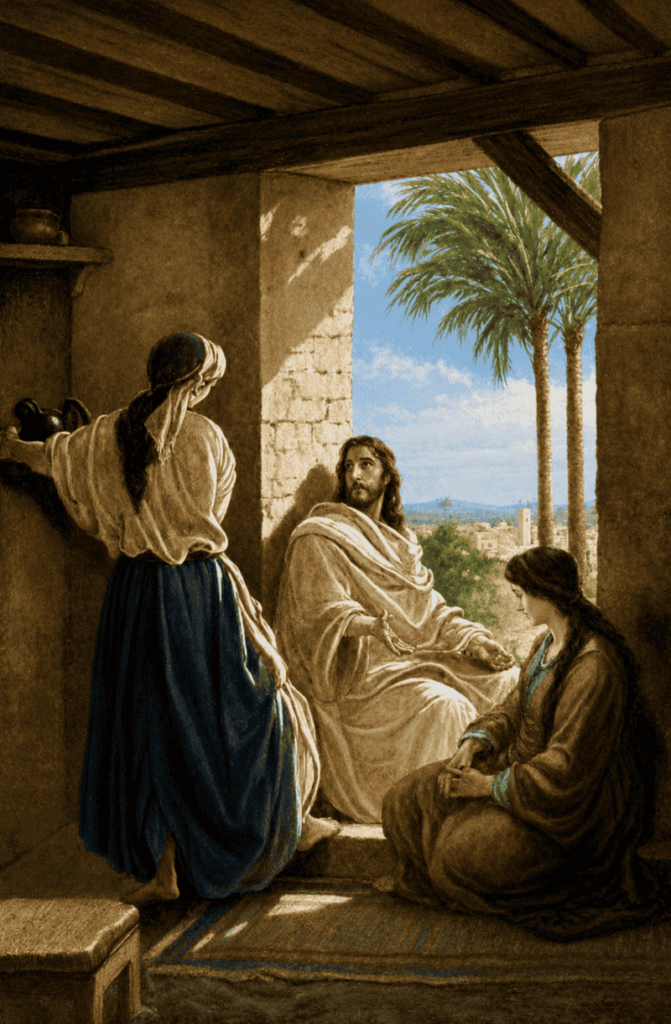
Jesus At The Home Of Martha And Mary. “Mary hath chosen that good part, which shall not be taken away from her.” Luke 10:42.
19. Whom did Jesus pronounce blessed?
“But He said, Yea rather, blessed are they that hear the word of God, and keep it.” Luke 11:28.
20. What did Christ say concerning the book of Daniel?
“When ye therefore shall see the abomination of desolation spoken of by Daniel the prophet, stand in the holy place, (whoso readeth, let him understand.)” Matt. 24:15.
21. What other book of the Bible is especially commended for our study?
“Blessed is he that readeth, and they that hear the words of this prophecy [the book of Revelation], and keep those things which are written therein: for the time is at hand.” Rev. 1:3.
Power In The Word
Christ The Word. “He spake, and it was.” Ps. 33:9.
1. Through what agency did God create the heavens?
“By the word of the Lord were the heavens made; and all the host of them by the breath of His mouth.”
“For He spake, and it was done; He commanded, and it stood fast.” Ps. 33:6, 9.
2. By what does Christ uphold all things?
“Upholding all things by the word of His power.” Heb. 1:3.
3. Of what are some willingly ignorant?
“For this they willingly are ignorant of, that by the word of God the heavens were of old, and the earth standing out of the water and in the water: whereby the world that then was, being overflowed with water, perished.” 2 Peter 3:5, 6.
4. By what are the present heavens and earth reserved for a similar fate?
“But the heavens and the earth, which are now, by the same word are kept in store, reserved unto fire against the day of judgment and perdition of ungodly men.” Verse 7.
5. In what other scripture is it shown that creative power is exercised through the word of God?
“Let them praise the name of the Lord: for He commanded, and they were created.” Ps. 148:5.
6. What change is wrought in one who is in Christ?
“Therefore if any man be in Christ, he is a new creature [there is a new creation, R. V., margin]: old things are passed away; behold, all things are become new.” 2 Cor. 5:17.
7. What is this new creation also called?
“Jesus answered and said unto him, Verily, verily, I say unto thee, Except a man be born again, he cannot see the kingdom of God.” John 3:3.
8. Through what agency is this new creation, or new birth, accomplished?
“Being born again, not of corruptible seed, but of incorruptible, by the word of God, which liveth and abideth forever.” 1 Peter 1:23.
9. What is the first creative commandment recorded in the Bible? and what was the result of it?
“And God said, Let there be light: and there was light.” Gen. 1:3.
10. What connection is there between the creation of light in the beginning, and the light of the gospel?
“For God, who commanded the light to shine out of darkness, hath shined in our hearts, to give the light of the knowledge of the glory of God in the face of Jesus Christ.” 2 Cor. 4:6.
11. Why were the people astonished at Christ’s teaching?
“And they were astonished at His doctrine: for His word was with power.” Luke 4:32.
12. What testified to the power of the word of Christ?
“And they were all amazed, and spake among themselves, saying, What a word is this! for with authority and power He commandeth the unclean spirits, and they come out.” Verse 36.
13. What did Christ say is the seed of the kingdom of God?
“The seed is the word of God.” Luke 8:11.
14. Where should the word of Christ dwell?
“Let the word of Christ dwell in you richly in all wisdom.” Col. 3:16.
15. What did Christ say of the unbelieving Jews respecting the word of God?
“Ye have not His word abiding in you: for whom He hath sent, Him ye believe not.” John 5:38.
16. How does the word of God work in the believer?
“For this cause also thank we God without ceasing, because, when ye received the word of God which ye heard of us, ye received it not as the word of men, but as it is in truth, the word of God, which effectually worketh also in you that believe.” 1 Thess. 2:13.
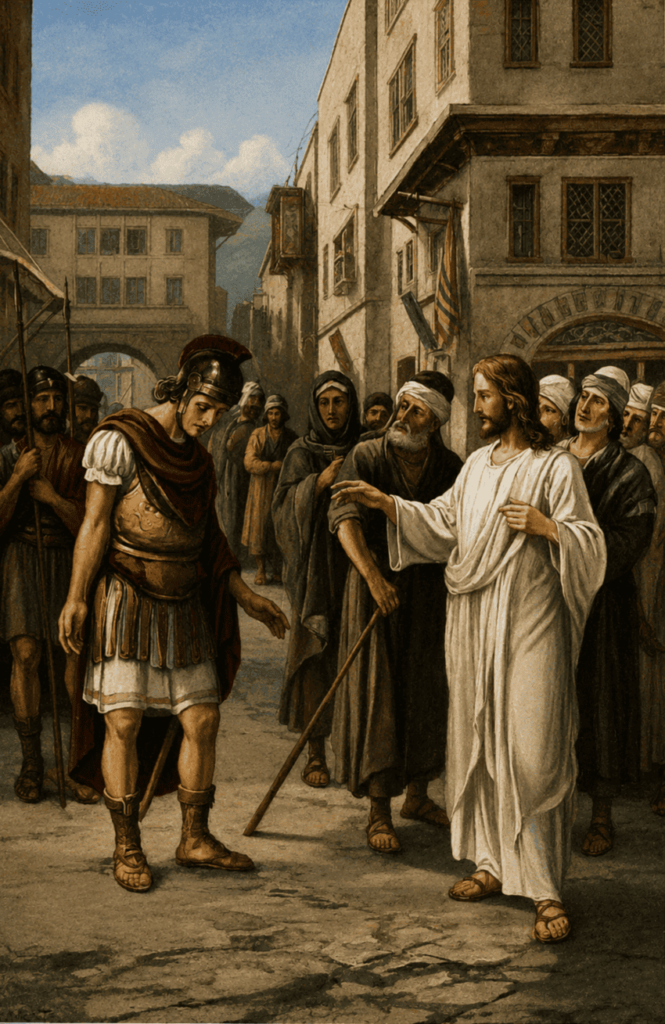
The Centurion. “Speak the word only, and my servant shall be healed.” Matt. 8:8.
17. What nature is imparted through the promises of God?
“Whereby are given unto us exceeding great and precious promises: that by these ye might be partakers of the divine nature, having escaped the corruption that is in the world through lust.” 2 Peter 1:4.
18. By what are believers made clean?
“Now ye are clean through the word which I have spoken unto you.” John 15:3.
19. How may a young man cleanse his way?
“Wherewithal shall a young man cleanse his way? by taking heed thereto according to Thy word.” Ps. 119:9.
20. How did God heal His people anciently?
“He sent His word, and healed them, and delivered them from their destructions.” Ps. 107:20.
21. How did the centurion show his faith in the power of Christ’s word to heal?
“The centurion answered and said, Lord, I am not worthy that Thou shouldest come under my roof: but speak the word only, and my servant shall be healed.” Matt. 8:8.
22. What power has the word when hidden in the heart?
“Thy word have I hid in mine heart, that I might not sin against Thee.” Ps. 119:11. See also Ps. 17:4.
23. Why did God humble Israel, and suffer them to hunger?
“And He humbled thee, and suffered thee to hunger, and fed thee with manna, … that He might make thee know that man doth not live by bread only, but by every word that proceedeth out of the mouth of the Lord doth man live.” Deut. 8:3.
24. What is required beyond a mere hearing of the word?
“But be ye doers of the word, and not hearers only, deceiving your own selves.” James 1:22.
25. What is the result of doing God’s will?
“And the world passeth away, and the lust thereof: but he that doeth the will of God abideth forever.” 1 John 2:17.
The Life-Giving Word
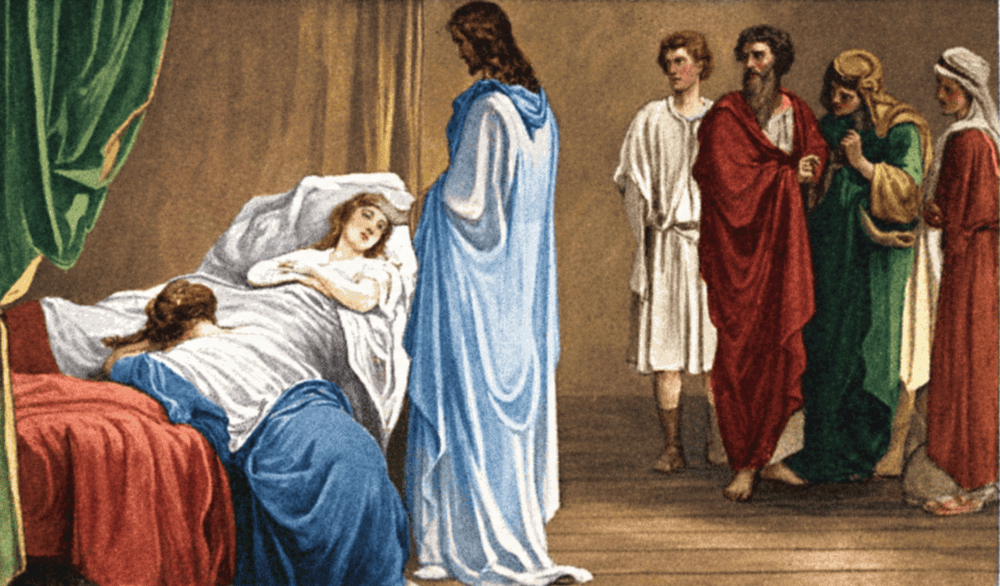
The Raising Of Jairus’s Daughter. “His commandment is life everlasting.” John 12:50.
1. What is the nature of the word of God?
“For the word of God is quick, and powerful, and sharper than any two-edged sword, piercing even to the dividing asunder of soul and spirit, and of the joints and marrow, and is a discerner of the thoughts and intents of the heart.” Heb. 4:12.
2. How are the oracles of God described?
“This is he, that was in the church in the wilderness with the angel which spake to him in the mount Sinai, and with our fathers: who received the lively oracles to give unto us.” Acts 7:38.
3. What did Christ declare His words to be?
“It is the spirit that quickeneth; the flesh profiteth nothing: the words that I speak unto you, they are spirit, and they are life.” John 6:63.
4. What was Peter’s testimony concerning Christ’s words?
“Then Simon Peter answered Him, Lord, to whom shall we go? Thou hast the words of eternal life.” Verse 68.
5. What did Christ declare His Father’s commandment to be?
“And I know that His commandment is life everlasting.” John 12:50.
6. What lesson was intended by feeding the children of Israel with the manna?
“And He humbled thee, and suffered thee to hunger, and fed thee with manna, which thou knewest not, neither did thy fathers know; that He might make thee know that man doth not live by bread only, but by every word that proceedeth out of the mouth of the Lord doth man live.” Deut. 8:3.
7. What interpretation did Jesus give to this lesson?
“Then Jesus said unto them, Verily, verily, I say unto you, Moses gave you not that bread from heaven; but My Father giveth you the true bread from heaven. For the bread of God is He which cometh down from heaven, and giveth life unto the world.” John 6:32, 33.
8. In further explanation of the meaning of this lesson, what did Jesus declare Himself to be?
“And Jesus said unto them, I am the bread of life: he that cometh to Me shall never hunger; and he that believeth on Me shall never thirst.” Verse 35.
9. What benefit is derived from eating this bread of life?
“As the living Father hath sent Me, and I live by the Father: so he that eateth Me, even he shall live by Me. This is that bread which came down from heaven: not as your fathers did eat manna, and are dead: he that eateth of this bread shall live forever.” Verses 57, 58.
10. What instance is recorded of one who fed upon the true manna?
“Thy words were found, and I did eat them; and Thy word was unto me the joy and rejoicing of mine heart: for I am called by Thy name, O Lord God of hosts.” Jer. 15:16.
11. What name is applied to Jesus as the revelation of the thought of God in the flesh?
“In the beginning was the Word, and the Word was with God, and the Word was God.” John 1:1. “And He was clothed with a vesture dipped in blood: and His name is called The Word of God.” Rev. 19:13.
12. What was in the Word?
“In Him was life; and the life was the light of men.” John 1:4.
13. What is Jesus therefore also called?
“That which was from the beginning, which we have heard, which we have seen with our eyes, which we have looked upon, and our hands have handled, of the Word of life.” 1 John 1:1.
14. Why did the Jews fail to find life in the Scriptures?
“Search the Scriptures; for in them ye think ye have eternal life: and they are they which testify of Me. And ye will not come to Me, that ye might have life.” John 5:39, 40.
15. What constitutes a part of Christian experience?
“And have tasted the good word of God, and the powers of the world to come.” Heb. 6:5. See answer to question 10.
16. In assigning him his life-work, what instruction did Jesus give to Peter?
“Jesus saith unto him, Feed My sheep.” John 21:17.
17. What apostolic injunction indicates the way in which this instruction is to be obeyed?
“I charge thee therefore before God, and the Lord Jesus Christ, who shall judge the quick and the dead at His appearing and His kingdom; Preach the word; be instant in season, out of season; reprove, rebuke, exhort with all long-suffering and doctrine.” 2 Tim. 4:1, 2.
18. How are we instructed to pray for both physical and spiritual nourishment?
“Give us this day our daily bread.” Matt. 6:11.
Note.—When “the Word became flesh, and dwelt among us,” the thought of God was revealed in human flesh. When holy men of God “spake as they were moved by the Holy Ghost,” the thought of God was revealed in human language. The union of the divine and the human in the manifestation of God’s thought in the flesh is declared to be “the mystery of godliness;” and there is the same mystery in the union of the divine thought and human language. The two revelations of God, in human flesh and in human speech, are both called the Word of God, and both are the Word of life. He who fails to find Christ thus in the Scriptures will not be able to feed upon the Word as the life-giving Word.
Christ In All The Bible
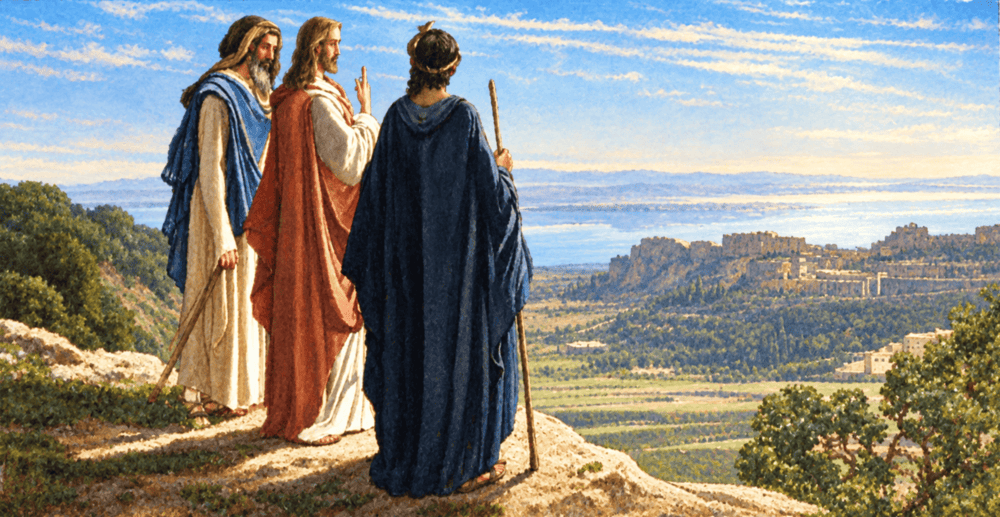
On The Way To Emmaus. “He expounded unto them in all the scriptures the things concerning Himself.” Luke 24:27.
1. Of whom did Christ say the Scriptures testify?
“Search the Scriptures; for in them ye think ye have eternal life: and they are they which testify of Me.” John 5:39.
NOTE.—“Search the Old Testament Scriptures: for they are they that testify of Christ. To find Him in them is the true and legitimate end of their study. To be able to interpret them as He interpreted them is the best result of all Biblical learning.” —Dean Alford.
2. Of whom did Moses and the prophets write?
“Philip findeth Nathanael, and saith unto him, We have found Him, of whom Moses in the law, and the prophets, did write, Jesus of Nazareth, the son of Joseph.” John 1:45.
NOTE.—In her translation of the Old Testament Scriptures, Helen Spurrell expressed the following wish for all who should read her translation: “May very many exclaim, as the translator has often done when studying numerous passages in the original, I have found the Messiah!”
3. From whose words did Christ say the disciples ought to have learned of His death and resurrection?
“O fools, and slow of heart to believe all that the prophets have spoken: ought not Christ to have suffered these things, and to enter into His glory?” Luke 24:25, 26.
4. How did Christ make it clear to them that the Scriptures testify of Him?
“And beginning at Moses and all the prophets, He expounded unto them in all the scriptures the things concerning Himself.” Verse 27.
5. What did He say a little later to the eleven?
“These are the words which I spake unto you, while I was yet with you, that all things must be fulfilled, which were written in the law of Moses, and in the prophets, and in the Psalms, concerning Me.” Verse 44.
6. Where in the Bible do we find the first promise of a Redeemer?
“And the Lord God said unto the serpent, … I will put enmity between thee and the woman, and between thy seed and her seed; it shall bruise thy head, and thou shalt bruise His heel.” Gen. 3:14, 15.
7. In what words was this promise renewed to Abraham?
“In thy seed shall all the nations of the earth be blessed.” Gen. 22:18. See also Gen. 26:4; 28:14.
8. To whom did this promised seed refer?
“Now to Abraham and his seed were the promises made. He saith not, And to seeds, as of many; but as of one, And to thy seed, which is Christ.” Gal. 3:16.
9. Whom did God promise to send with Israel to guide them into the promised land?
“Behold, I send an Angel before thee, to keep thee in the way, and to bring thee into the place which I have prepared.” Ex. 23:20.
10. Who was the Rock that went with them?
“And did all drink the same spiritual drink: for they drank of that spiritual Rock that followed [went with, margin] them: and that Rock was Christ.” 1 Cor. 10:4.
11. In what prophecy are Christ’s life, suffering, and death touchingly foretold?
In the fifty-third chapter of Isaiah.
12. Where is the price of Christ’s betrayal foretold?
“So they weighed for My price thirty pieces of silver.” Zech. 11:12. See Matt. 26:15.
13. Where in the Psalms are Christ’s dying words recorded?
“My God, My God, why hast thou forsaken Me?” Ps. 22:1. See Matt. 27:46. “Into Thine hand I commit My spirit.” Ps. 31:5. See Luke 23:46.
14. How is Christ’s resurrection foretold in the Psalms?
“I will declare the decree: the Lord hath said unto Me, Thou art My Son; this day have I begotten Thee.” Ps. 2:7. See Acts 13:33.
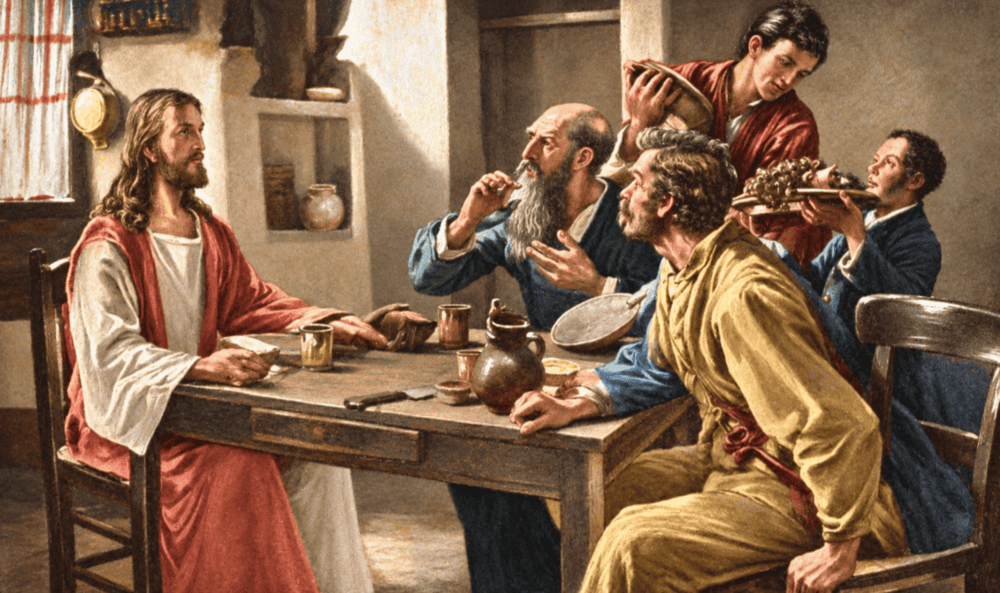
Made Known In The Breaking Of Bread. “Did not our heart burn within us, while He talked with us by the way, and while He opened to us the scriptures?” Luke 24:32.
15. Where again in the Psalms is His resurrection foretold?
“For Thou wilt not leave My soul in hell; neither wilt Thou suffer Thine Holy One to see corruption.” Ps. 16:10. See Acts 2:25-31.
16. In what words does Daniel foretell Christ’s receiving His kingdom?
“I saw in the night-visions, and, behold, one like the Son of man came with the clouds of heaven, and came to the Ancient of days, and they brought Him near before Him. And there was given Him dominion, and glory, and a kingdom, that all people, nations, and languages, should serve Him: His dominion is an everlasting dominion, which shall not pass away, and His kingdom that which shall not be destroyed.” Dan. 7:13, 14.
See also Luke 1:32, 33; 19:11, 12; Rev. 11:15.
17. How is Christ’s second coming described in the Psalms?
“Let the floods clap their hands: let the hills be joyful together before the Lord; for He cometh to judge the earth: with righteousness shall He judge the world, and the people with equity.” Ps. 98:8, 9. “Our God shall come, and shall not keep silence: a fire shall devour before Him, and it shall be very tempestuous round about Him. He shall call to the heavens from above, and to the earth, that He may judge His people. Gather My saints together unto Me; those that have made a covenant with Me by sacrifice.” Ps. 50:3-5.
18. What is Christ to one renewed after God’s image?
“Christ is all, and in all.” Col. 3:11.