Table of contents
- Faith
- Hope
- Repentance
- Confession and Forgiveness
- Conversion, Or The New Birth
- Baptism
- Reconciled To God
- Acceptance With God
- Justification By Faith
- Righteousness And Life
- Consecration
- Bible Election
- Bible Sanctification
- Importance Of Sound Doctrine
- Present Truth
- The Obedience Of Faith
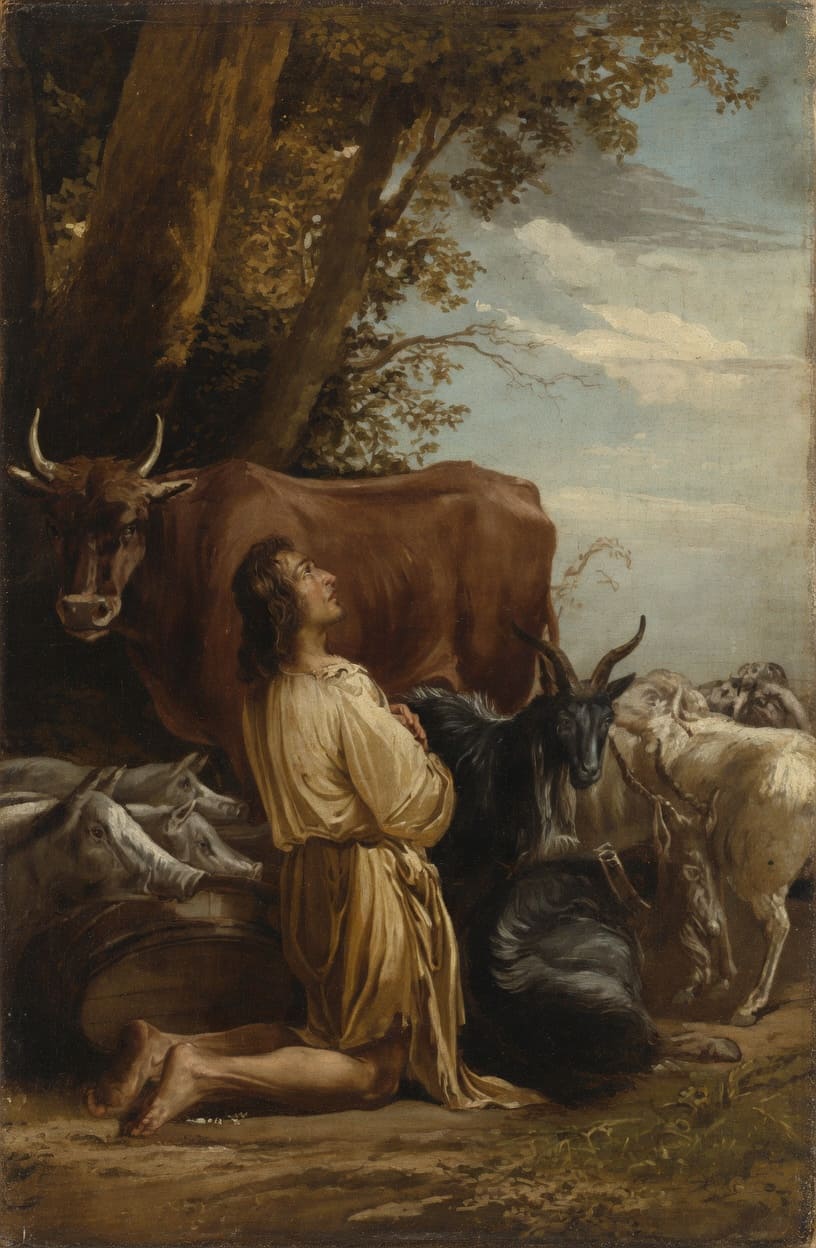
The Prodigal Son. “When he came to himself, he said, … I will arise and go to my father.” Luke 15:17, 18.
Faith
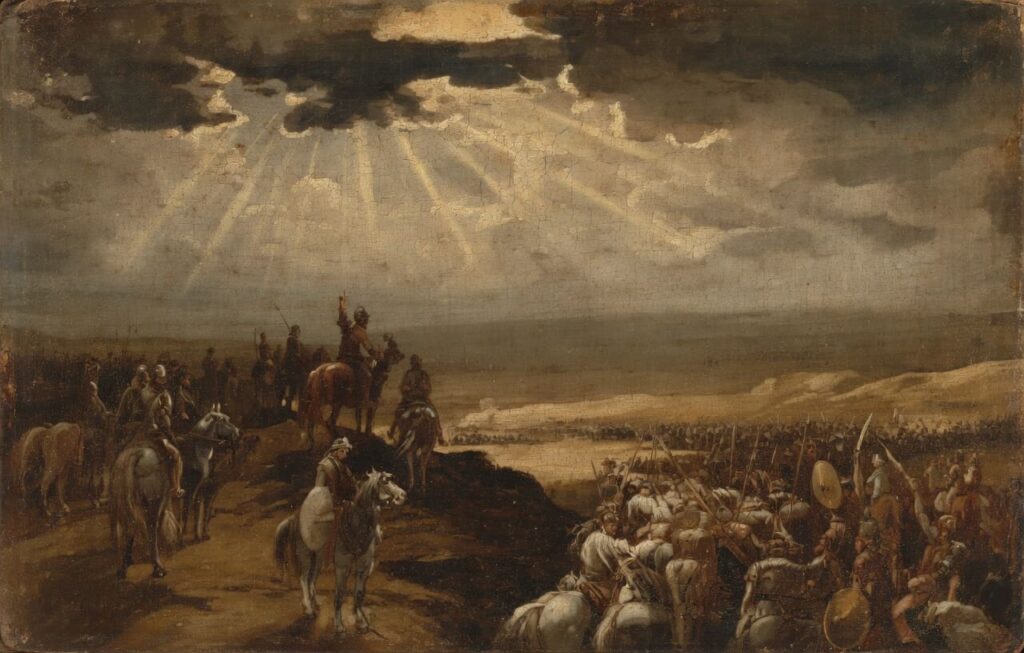
Joshua Commanding The Sun To Stand Still. “All things are possible to him that believeth.” Mark 9:23.
1. What is faith declared to be?
“Faith is the substance of things hoped for, the evidence of things not seen.” Heb. 11:1.
2. How necessary is faith?
“Without faith it is impossible to please Him.” Verse 6.
3. Is mere assent to divine truth sufficient?
“Thou believest that there is one God; thou doest well: the devils also believe, and tremble.” James 2:19.
4. What is required besides a belief in the existence of God?
“For he that cometh to God must believe that He is, and that He is a rewarder of them that diligently seek Him.” Heb. 11:6, last part.
5. From whom does faith come?
“For by grace are ye saved through faith; and that not of yourselves; it is the gift of God.” Eph. 2:8.
6. Why did God raise Christ from the dead?
“Who by Him do believe in God, that raised Him up from the dead, and gave Him glory; that your faith and hope might be in God.” 1 Peter 1:21.
7. What is Christ’s relation to this faith?
“Looking unto Jesus the author and finisher of our faith.” Heb. 12:2.
8. What is the basis of faith?
“So then faith cometh by hearing, and hearing by the word of God.” Rom. 10:17.
9. What relation does faith bear to knowledge?
“Through faith we understand that the worlds were framed by the word of God.” Heb. 11:3.
10. By what principle is genuine faith actuated?
“In Jesus Christ neither circumcision availeth anything, nor uncircumcision; but faith which worketh by love.” Gal. 5:6.
11. Of what is faith a fruit?
“But the fruit of the Spirit is love, joy, peace, long-suffering, gentleness, goodness, faith.” Verse 22.
12. What in the early church showed living faith?
“Remembering without ceasing your work of faith, and labor of love.” 1 Thess. 1:3.
13. What is necessary in order that the preaching of the gospel may be profitable?
“For unto us was the gospel preached, as well as unto them: but the word preached did not profit them, not being mixed with faith in them that heard it.” Heb. 4:2.
14. What is the character of any act or service not performed in faith?
“Whatsoever is not of faith is sin.” Rom. 14:23.
15. How does Abraham’s experience show that obedience and faith are inseparable?
“By faith Abraham, when he was called to go out into a place which he should after receive for an inheritance, obeyed; and he went out, not knowing whither he went.” Heb. 11:8.
16. With what, therefore, is the faith of Jesus joined?
“Here is the patience of the saints: here are they that keep the commandments of God, and the faith of Jesus.” Rev. 14:12.
17. In what other statement is the same truth emphasized?
“But wilt thou know, O vain man, that faith without works is dead?” James 2:20.
18. How is faith brought to perfection?
“Seest thou how faith wrought with his works, and by works was faith made perfect?” Verse 22.
19. What is the result of faith’s being put to the test?
“The trying of your faith worketh patience.” James 1:3.
20. What relationship to God is established by faith?
“For ye are all the children of God by faith in Christ Jesus.” Gal. 3:26.
21. How do the children of God walk?
“For we walk by faith, not by sight.” 2 Cor. 5:7.
22. Upon what condition may one expect answers to prayer?
“But let him ask in faith, nothing wavering. For he that wavereth is like a wave of the sea driven with the wind and tossed.” James 1:6.
23. To what parts of the ancient armor is faith compared?
“Above all, taking the shield of faith, wherewith ye shall be able to quench all the fiery darts of the wicked.” Eph. 6:16. “Putting on the breastplate of faith and love.” 1 Thess. 5:8.
24. What chapter in the Bible is devoted to faith?
The eleventh chapter of Hebrews. In verses 33-38 are summarized the victories of the heroes of faith.
25. What gives victory in our conflicts with the world?
“This is the victory that overcometh the world, even our faith.” 1 John 5:4.
26. What is the ultimate purpose of faith?
“Receiving the end of your faith, even the salvation of your souls.” 1 Peter 1:8, 9.
Hope
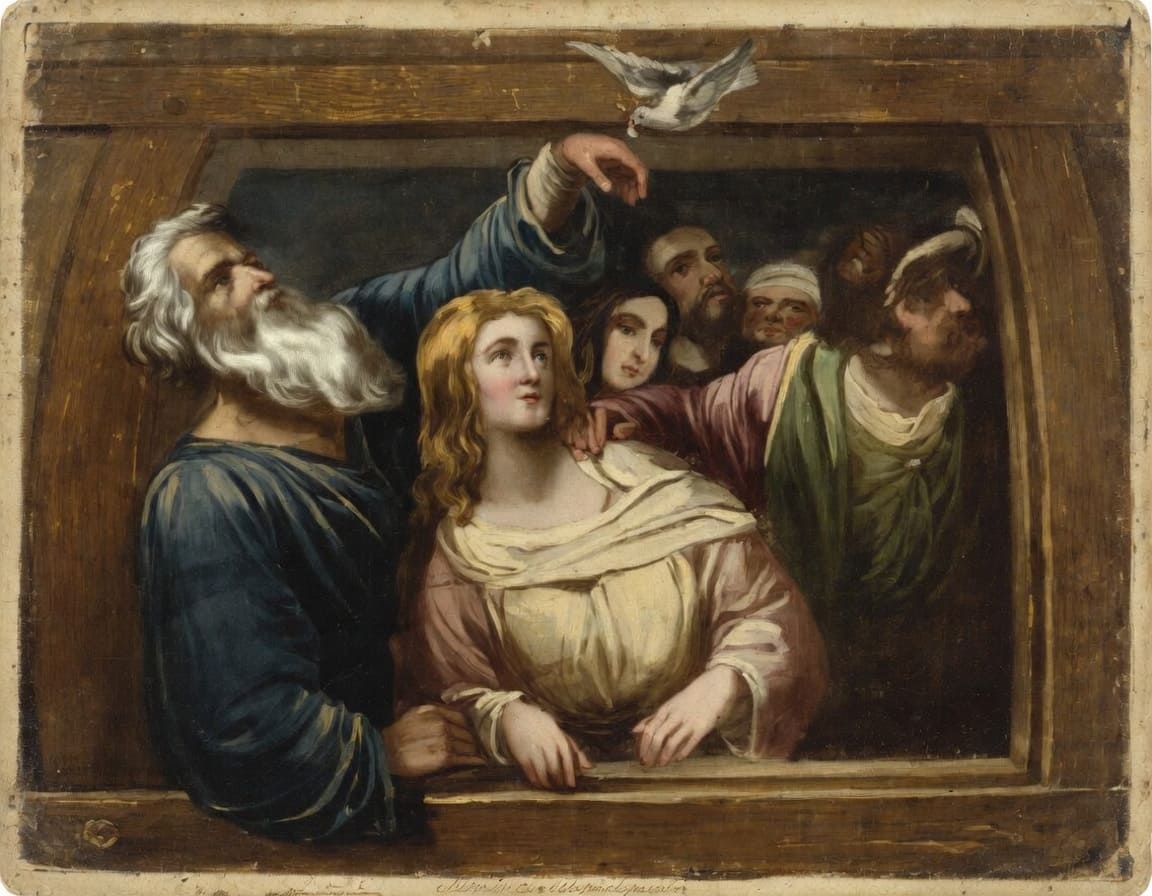
Return Of The Dove. “Blessed be God … which … hath begotten us again unto a lively hope.” 1 Peter 1:3.
1. What is the relation between faith and hope?
“Now faith is the substance of things hoped for, the evidence of things not seen.” Heb. 11:1.
2. Why were the Scriptures written?
“For whatsoever things were written aforetime were written for our learning, that we through patience and comfort of the Scriptures might have hope.” Rom. 15:4.
3. Why should God’s wonderful works be rehearsed to the children?
“We will not hide them from their children, showing to the generation to come the praises of the Lord, and His strength, and His wonderful works that He hath done…. That they might set their hope in God, and not forget the works of God, but keep His commandments.” Ps. 78:4-7.
4. In what condition are those who are without Christ?
“Wherefore remember, that ye being in time past Gentiles in the flesh, … that at that time ye were without Christ, being aliens from the commonwealth of Israel, and strangers from the covenants of promise, having no hope, and without God in the world.” Eph. 2:11, 12.
5. What does hope become to the Christian?
“Which hope we have as an anchor of the soul, both sure and steadfast, and which entereth into that within the veil.” Heb. 6:19.
6. Who have hope in their death?
“The wicked is driven away in his wickedness: but the righteous hath hope in his death.” Prov. 14:32.
7. In bereavement, from what hopeless sorrow are Christians delivered?
“But I would not have you to be ignorant, brethren, concerning them which are asleep, that ye sorrow not, even as others which have no hope.” 1 Thess. 4:13.
8. Unto what has the resurrection of Christ begotten us?
“Blessed be the God and Father of our Lord Jesus Christ, which according to His abundant mercy hath begotten us again unto a lively hope by the resurrection of Jesus Christ from the dead.” 1 Peter 1:3.
9. What is the Christian’s hope called?
“Looking for that blessed hope, and the glorious appearing of the great God and our Saviour Jesus Christ.” Titus 2:13.
10. At what time did Paul expect to realize his hope?
“Henceforth there is laid up for me a crown of righteousness, which the Lord, the righteous Judge, shall give me at that day: and not to me only, but unto all them also that love His appearing.” 2 Tim. 4:8.
11. What will this hope lead one to do?
“And every man that hath this hope in him purifieth himself, even as He is pure.” 1 John 3:3.
12. What does the prophet Jeremiah say is a good thing for a man to do?
“It is good that a man should both hope and quietly wait for the salvation of the Lord.” Lam. 3:26.
13. What is said of the hope of the hypocrite?
“So are the paths of all that forget God; and the hypocrite’s hope shall perish: whose hope shall be cut off, and whose trust shall be a spider’s web.” Job 8:13, 14.
14. What is the condition of one whose hope is in God?
“Happy is he that hath the God of Jacob for his help, whose hope is in the Lord his God.” Ps. 146:5. “Blessed is the man that trusteth in the Lord, and whose hope the Lord is.” Jer. 17:7.
15. In what may the child of God abound?
“Now the God of hope fill you with all joy and peace in believing, that ye may abound in hope, through the power of the Holy Ghost.” Rom. 15:13.
16. In what do Christians rejoice?
“By whom also we have access by faith into this grace wherein we stand, and rejoice in hope of the glory of God.” Rom. 5:2.
17. What will prevent us from being put to shame?
“And hope maketh not ashamed; because the love of God is shed abroad in our hearts by the Holy Ghost which is given unto us.” Verse 5.
18. In the time of trouble, who will be the hope of God’s people?
“The Lord also shall roar out of Zion, and utter His voice from Jerusalem; and the heavens and the earth shall shake: but the Lord will be the hope of His people, and the strength of the children of Israel.” Joel 3:16.
19. What inspiring words are spoken to such as hope in God?
“Be of good courage, and He shall strengthen your heart, all ye that hope in the Lord.” Ps. 31:24.
20. How long should our hope endure?
“And we desire that every one of you do show the same diligence to the full assurance of hope unto the end.” Heb. 6:11.
Repentance
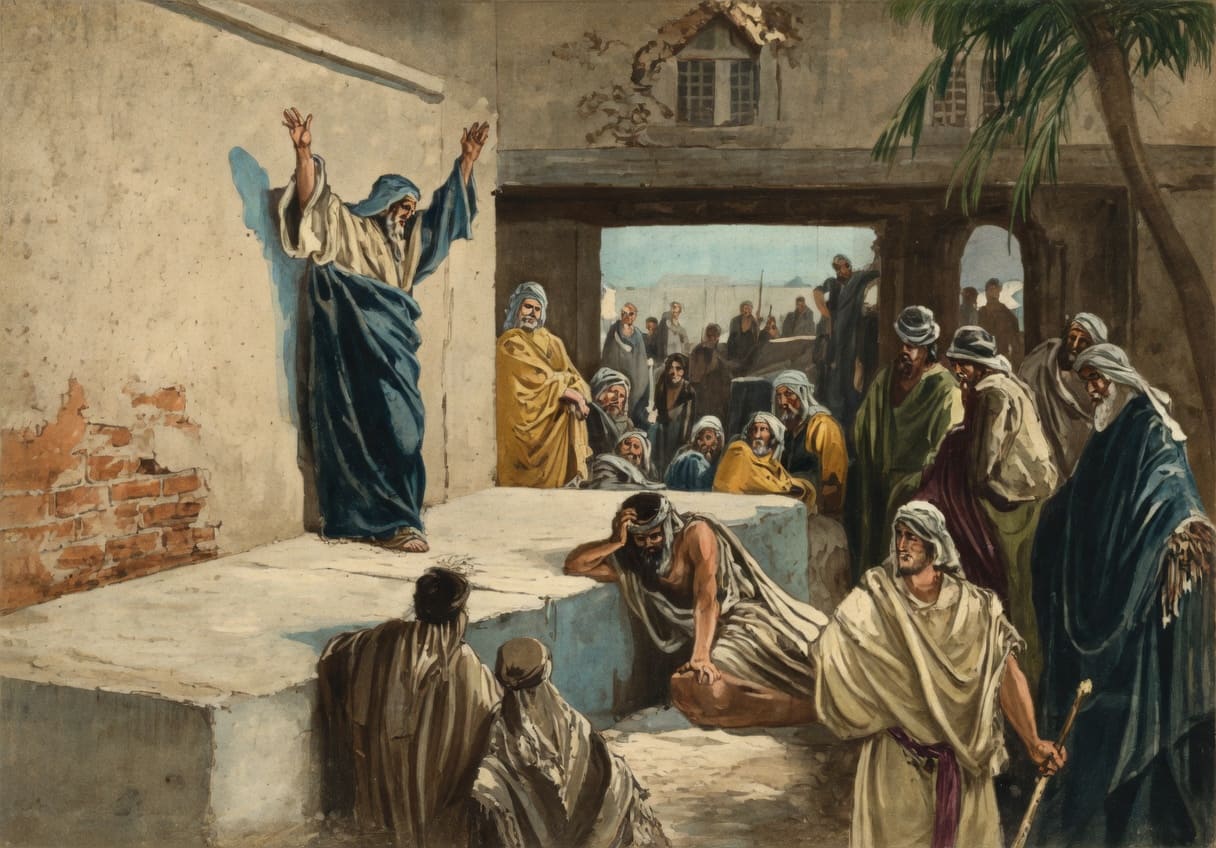
Micaiah Urging Israel To Repentance. “The goodness of God leadeth thee to repentance.” Rom. 2:4.
1. Who are called to repentance?
“I came not to call the righteous, but sinners to repentance.” Luke 5:32.
2. What accompanies repentance?
“And that repentance and remission of sins should be preached in His name among all nations.” Luke 24:47.
3. By what means is sin made known?
“By the law is the knowledge of sin.” Rom. 3:20.
4. How many are sinners?
“We have before proved both Jews and Gentiles, that they are all under sin.” Verse 9.
5. What do transgressors bring upon themselves?
“Let no man deceive you with vain words: for because of these things cometh the wrath of God upon the children of disobedience.” Eph. 5:6.
6. Who awakens the soul to a sense of its sinful condition?
“When He [the Comforter] is come, He will reprove [convince, margin] the world of sin.” John 16:8.
7. What are fitting inquiries for those convicted of sin?
“Men and brethren, what shall we do?” “Sirs, what must I do to be saved?” Acts 2:37; 16:30.
8. What replies does Inspiration return to these inquiries?
“Repent, and be baptized every one of you in the name of Jesus Christ for the remission of sins.” “Believe on the Lord Jesus Christ, and thou shalt be saved.” Acts 2:38; 16:31.
9. What will the truly repentant sinner be constrained to do?
“I will declare mine iniquity; I will be sorry for my sin.” Ps. 38:18.
10. What is the result of godly sorrow?
“For godly sorrow worketh repentance to salvation.” 2 Cor. 7:10.
11. What does the sorrow of the world do?
“The sorrow of the world worketh death.” Same verse.
12. How does godly sorrow for sin manifest itself?
“For behold this selfsame thing, that ye sorrowed after a godly sort, what carefulness it wrought in you, yea, what clearing of yourselves, yea, what indignation, yea, what fear, yea, what vehement desire, yea, what zeal, yea, what revenge! In all things ye have approved yourselves to be clear in this matter.” Verse 11.
13. What did John the Baptist say to the Pharisees and Sadducees when he saw them come to his baptism?
“O generation of vipers, who hath warned you to flee from the wrath to come?” Matt. 3:7.
14. What did he tell them to do?
“Bring forth therefore fruits meet for repentance.” Verse 8.
Note.—“There can be no repentance without reformation. Repentance is a change of mind; reformation is a corresponding change of life.”—Dr. Raleigh.
15. When God sent the Ninevites a warning message, how did they show their repentance, and what was the result?
“And God saw their works, that they turned from their evil way; and God repented of the evil that He had said that He would do unto them; and He did it not.” Jonah 3:10.
16. What leads sinners to repentance?
“Or despisest thou the riches of His goodness and forbearance and long-suffering; not knowing that the goodness of God leadeth thee to repentance?” Rom. 2:4.
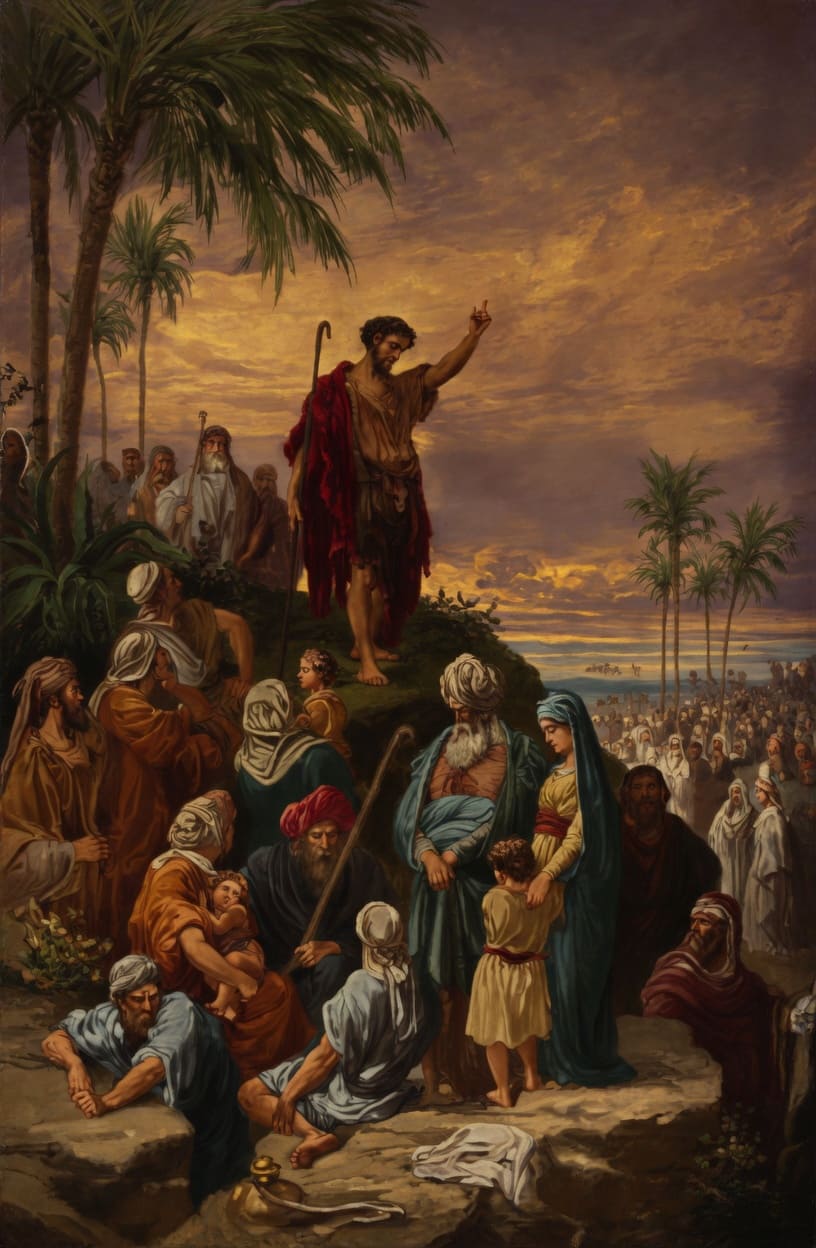
John The Baptist Preaching Repentance. “Bring forth therefore fruits meet for repentance.” Matt. 3:8.
Confession and Forgiveness
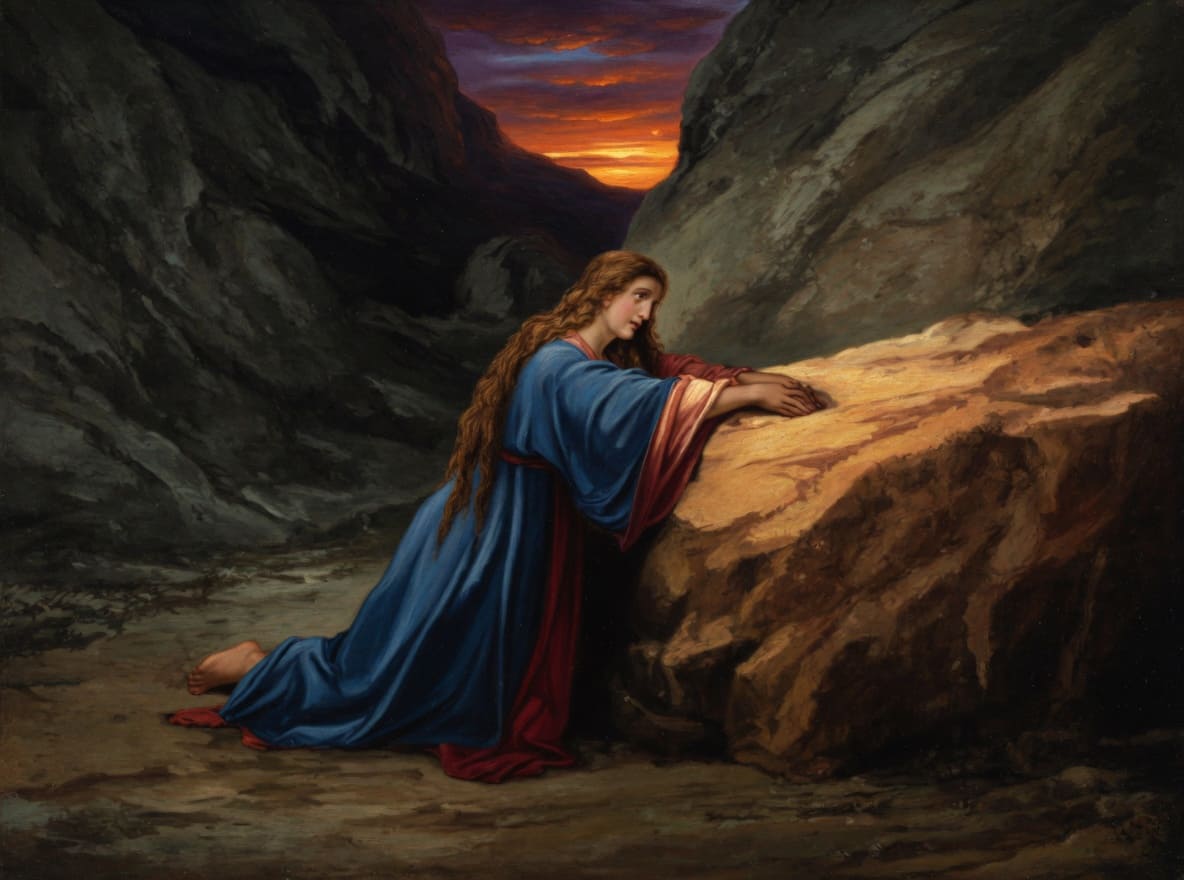
Mary Magdalene’s Repentance. “According unto the multitude of Thy tender mercies blot out my transgressions.” Ps. 51:1.
1. What instruction is given concerning confession of sin?
“Speak unto the children of Israel, When a man or woman shall commit any sin that men commit, to do a trespass against the Lord, and that person be guilty; then shall they confess their sin which they have done.” Num. 5:6, 7.
2. How futile is it to attempt to hide sin from God?
“But if ye will not do so, behold, ye have sinned against the Lord: and be sure your sin will find you out.” Num. 32:23. “Thou hast set our iniquities before Thee, our secret sins in the light of Thy countenance.” Ps. 90:8. “All things are naked and opened unto the eyes of Him with whom we have to do.” Heb. 4:13.
3. What promise is made to those who confess their sins?
“If we confess our sins, He is faithful and just to forgive us our sins, and to cleanse us from all unrighteousness.” 1 John 1:9.
4. What different results attend the covering and the confessing of sins?
“He that covereth his sins shall not prosper: but whoso confesseth and forsaketh them shall have mercy.” Prov. 28:13.
5. How definite should we be in confessing our sins?
“And it shall be, when he shall be guilty in one of these things, that he shall confess that he hath sinned in that thing.” Lev. 5:5.
Note.—“True confession is always of a specific character, and acknowledges particular sins. They may be of such a nature as to be brought before God only; they may be wrongs that should be confessed to individuals who have suffered injury through them; or they may be of a public character, and should then be as publicly confessed. But all confession should be definite and to the point, acknowledging the very sins of which you are guilty.”—“Steps to Christ,” page 43.
6. How fully did Israel once acknowledge their wrong-doing?
“And all the people said unto Samuel, Pray for thy servants unto the Lord thy God, that we die not: for we have added unto all our sins this evil, to ask us a king.” 1 Sam. 12:19.
7. When David confessed his sin, what did he say God did?
“I acknowledged my sin unto Thee, and mine iniquity have I not hid. I said, I will confess my transgressions unto the Lord; and Thou forgavest the iniquity of my sin.” Ps. 32:5.
8. Upon what did he rest his hope for forgiveness?
“Have mercy upon me, O God, according to Thy loving-kindness: according unto the multitude of Thy tender mercies blot out my transgressions.” Ps. 51:1.
9. What is God ready to do for all who seek for forgiveness?
“For Thou, Lord, art good, and ready to forgive; and plenteous in mercy unto all them that call upon Thee.” Ps. 86:5.
10. What is the measure of the greatness of God’s mercy?
“For as the heaven is high above the earth, so great is His mercy toward them that fear Him.” Ps. 103:11.
11. How fully does the Lord pardon when one repents?
“Let the wicked forsake his way, and the unrighteous man his thoughts: and let him return unto the Lord, and He will have mercy upon him; and to our God, for He will abundantly pardon.” Isa. 55:7.
12. What reason is given for God’s readiness to forgive sin?
“Who is a God like unto Thee, that pardoneth iniquity, and passeth by the transgression of the remnant of His heritage? He retaineth not His anger forever, because He delighteth in mercy.” Micah 7:18. See Ps. 78:38.
13. Why does God manifest such mercy and long-suffering toward men?
“The Lord is not slack concerning His promise, as some men count slackness; but is long-suffering to us-ward, not willing that any should perish, but that all should come to repentance.” 2 Peter 3:9.
14. What prayer did Moses offer in behalf of Israel?
“Pardon, I beseech Thee, the iniquity of this people according unto the greatness of Thy mercy, and as Thou hast forgiven this people, from Egypt even until now.” Num. 14:19.
15. What reply did the Lord immediately make?
“And the Lord said, I have pardoned according to thy word.” Verse 20.
16. When the prodigal son, in the parable, repented and turned toward home, what did his father do?
“When he was yet a great way off, his father saw him, and had compassion, and ran, and fell on his neck, and kissed him.” Luke 15:20.
17. How did the father show his joy at his son’s return?
“The father said to his servants, Bring forth the best robe, and put it on him; and put a ring on his hand, and shoes on his feet: and bring hither the fatted calf, and kill it; and let us eat, and be merry: for this my son was dead, and is alive again; he was lost, and is found.” Verses 22-24.
18. What is felt in heaven when a sinner repents?
“Likewise, I say unto you, there is joy in the presence of the angels of God over one sinner that repenteth.” Verse 10.
19. What did Hezekiah say God had done with his sins?
“Behold, for peace I had great bitterness: but Thou hast in love to my soul delivered it from the pit of corruption: for Thou hast cast all my sins behind Thy back.” Isa. 38:17.
20. How completely does God wish to separate sin from us?
“Thou wilt cast all their sins into the depths of the sea.” Micah 7:19. “As far as the east is from the west, so far hath He removed our transgressions from us.” Ps. 103:12.
21. How did the people respond to the preaching of John?
“Then went out to him Jerusalem, and all Judea, and all the region round about Jordan, and were baptized of him in Jordan, confessing their sins.” Matt. 3:5, 6.
22. How did some of the believers at Ephesus testify to the sincerity of the confession of their sins?
“And many that believed came, and confessed, and showed their deeds. Many of them also which used curious arts brought their books together, and burned them before all men: and they counted the price of them, and found it fifty thousand pieces of silver.” Acts 19:18, 19.
23. Through whom are repentance and forgiveness granted?
“The God of our fathers raised up Jesus, whom ye slew and hanged on a tree. Him hath God exalted with His right hand to be a Prince and a Saviour, for to give repentance to Israel, and forgiveness of sins.” Acts 5:30, 31.
24. What is the only unpardonable sin?
“Wherefore I say unto you, All manner of sin and blasphemy shall be forgiven unto men: but the blasphemy against the Holy Ghost shall not be forgiven unto men. And whosoever speaketh a word against the Son of man, it shall be forgiven him: but whosoever speaketh against the Holy Ghost, it shall not be forgiven him, neither in this world, neither in the world to come.” Matt. 12:31, 32.
Note.—As the Holy Spirit is the agent that convicts of sin, and brings the offer of pardon through the Word, the denial of the Spirit’s work is the refusal of pardon. In other words, the only unpardonable sin is the sin which refuses to be pardoned.
25. Upon what basis has Christ taught us to ask forgiveness?
“And forgive us our debts, as we forgive our debtors.” Matt. 6:12.
26. What spirit must those cherish whom God forgives?
“For if ye forgive men their trespasses, your Heavenly Father will also forgive you: but if ye forgive not men their trespasses, neither will your Father forgive your trespasses.” Verses 14, 15.
27. What exhortation is based on the fact that God has forgiven us?
“And be ye kind one to another, tender-hearted, forgiving one another, even as God for Christ’s sake hath forgiven you.” Eph. 4:32.
28. In what condition is one whose sins are forgiven?
“Blessed is he whose transgression is forgiven, whose sin is covered. Blessed is the man unto whom the Lord imputeth not iniquity, and in whose spirit there is no guile.” Ps. 32:1, 2.
Conversion, Or The New Birth
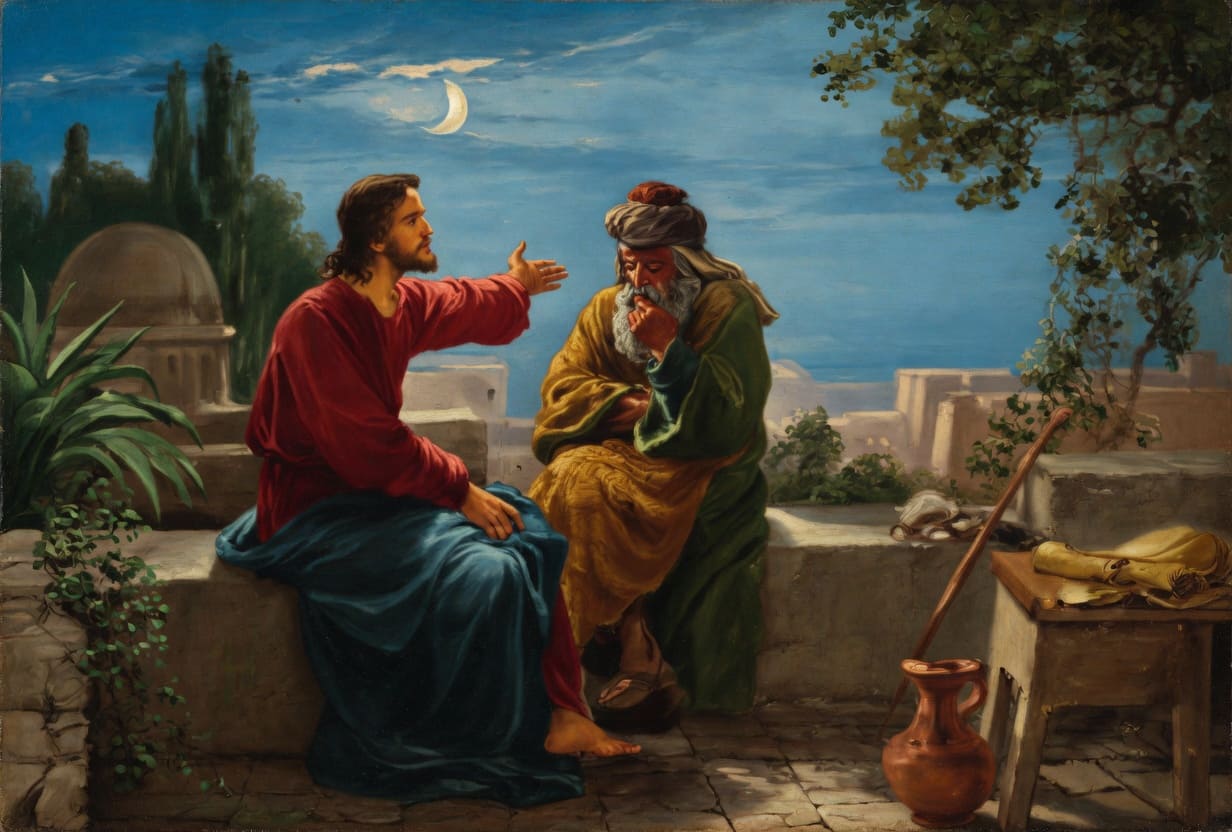
Christ And Nicodemus. “Ye must be born again.” John 3:7.
1. How did Jesus emphasize the necessity of conversion?
“Verily I say unto you, Except ye be converted, and become as little children, ye shall not enter into the kingdom of heaven.” Matt. 18:3.
2. In what other statement did He teach the same truth?
“Verily, verily, I say unto thee, Except a man be born again, he cannot see the kingdom of God.” John 3:3.
3. How did he further explain the new birth?
“Jesus answered, Verily, verily, I say unto thee, Except a man be born of water and of the Spirit, he cannot enter into the kingdom of God.” Verse 5.
4. With what comparison did He illustrate the subject?
“The wind bloweth where it listeth, and thou hearest the sound thereof, but canst not tell whence it cometh, and whither it goeth: so is every one that is born of the Spirit.” Verse 8.
5. What change is wrought in conversion, or the new birth?
“Even when we were dead in sins, hath quickened us together with Christ, (by grace ye are saved).” Eph. 2:5.
6. What is one evidence of this change from death to life?
“We know that we have passed from death unto life, because we love the brethren. He that loveth not his brother abideth in death.” 1 John 3:14.
7. From what is a converted sinner saved?
“Let him know, that he which converteth the sinner from the error of his way shall save a soul from death, and shall hide a multitude of sins.” James 5:20. See Acts 26:14-18.
8. To whom are sinners brought by conversion?
“Create in me a clean heart, O God; and renew a right spirit within me…. Then will I teach transgressors Thy ways; and sinners shall be converted unto Thee.” Ps. 51:10-13.
9. In what words to Peter did Jesus indicate the kind of service a converted person should render to his brethren?
“And the Lord said, Simon, Simon, behold, Satan hath desired to have you, that he may sift you as wheat: but I have prayed for thee, that thy faith fail not: and when thou art converted, strengthen thy brethren.” Luke 22:31, 32.
10. What other experience is associated with conversion?
“For this people’s heart is waxed gross, and their ears are dull of hearing, and their eyes they have closed; lest at any time they should see with their eyes, and hear with their ears, and should understand with their heart, and should be converted, and I should heal them.” Matt. 13:15.
11. What gracious promise does God make to His people?
“I will heal their backsliding, I will love them freely: for Mine anger is turned away from him.” Hosea 14:4.
12. By what means is this healing accomplished?
“He [Christ] was wounded for our transgressions, He was bruised for our iniquities: the chastisement of our peace was upon Him; and with His stripes we are healed.” Isa. 53:5.
13. What takes place when one is converted to Christ?
“Wherefore if any man is in Christ, he is a new creation: the old things are passed away; behold, they are become new.” 2 Cor. 5:17, R. V., margin. See Acts 9:1-22; 22:1-21; 26:1-23.
14. What is the value of merely outward forms?
“For in Christ Jesus neither circumcision availeth anything, nor uncircumcision, but a new creature.” Gal. 6:15.
15. Through what was the original creation wrought?
“By the word of the Lord were the heavens made; and all the host of them by the breath of His mouth.” Ps. 33:6.
16. Through what instrumentality is conversion wrought?
“Being born again, not of corruptible seed, but of incorruptible, by the word of God, which liveth and abideth forever.” 1 Peter 1:23.
17. What change is wrought by beholding Jesus?
“But we all with open face beholding as in a glass the glory of the Lord, are changed into the same image from glory to glory, even as by the Spirit of the Lord.” 2 Cor. 3:18.
NOTE.—A beautiful statue once stood in the market-place of an Italian city. It was the statue of a Greek slave girl. It represented the slave as tidy and well dressed. A ragged, uncombed little street child, coming across the statue in her play one day, stopped and gazed at it in admiration. She was captivated by it. She gazed long and lovingly. Moved by a sudden impulse, she went home and washed her face and combed her hair. Another day she stopped again before the statue and admired it, and got a new idea. Next day her tattered clothes were washed and mended. Each time she looked at the statue she found something in its beauties to admire and copy, until she was a transformed child. By beholding we become changed.
18. What are the evidences that one has been born of God?
“If ye know that He is righteous, ye know that every one that doeth righteousness is born of Him.” “Beloved, let us love one another: for love is of God; and every one that loveth is born of God, and knoweth God.” 1 John 2:29; 4:7.
19. What is true of every one who believes in Jesus?
“Whosoever believeth that Jesus is the Christ is born of God.” 1 John 5:1.
20. What do those born of God not do?
“We know that whosoever is born of God sinneth not; but he that is begotten of God keepeth himself, and that wicked one toucheth him not.” Verse 18.
21. What indwelling power keeps such from sinning?
“Whosoever is born of God doth not commit sin; for His seed remaineth in him: and he cannot sin, because he is born of God.” 1 John 3:9. See 1 John 5:4; Gen. 39:9.
22. What will be the experience of those born of the Spirit?
“There is therefore now no condemnation to them which are in Christ Jesus, who walk not after the flesh, but after the Spirit.” Rom. 8:1.
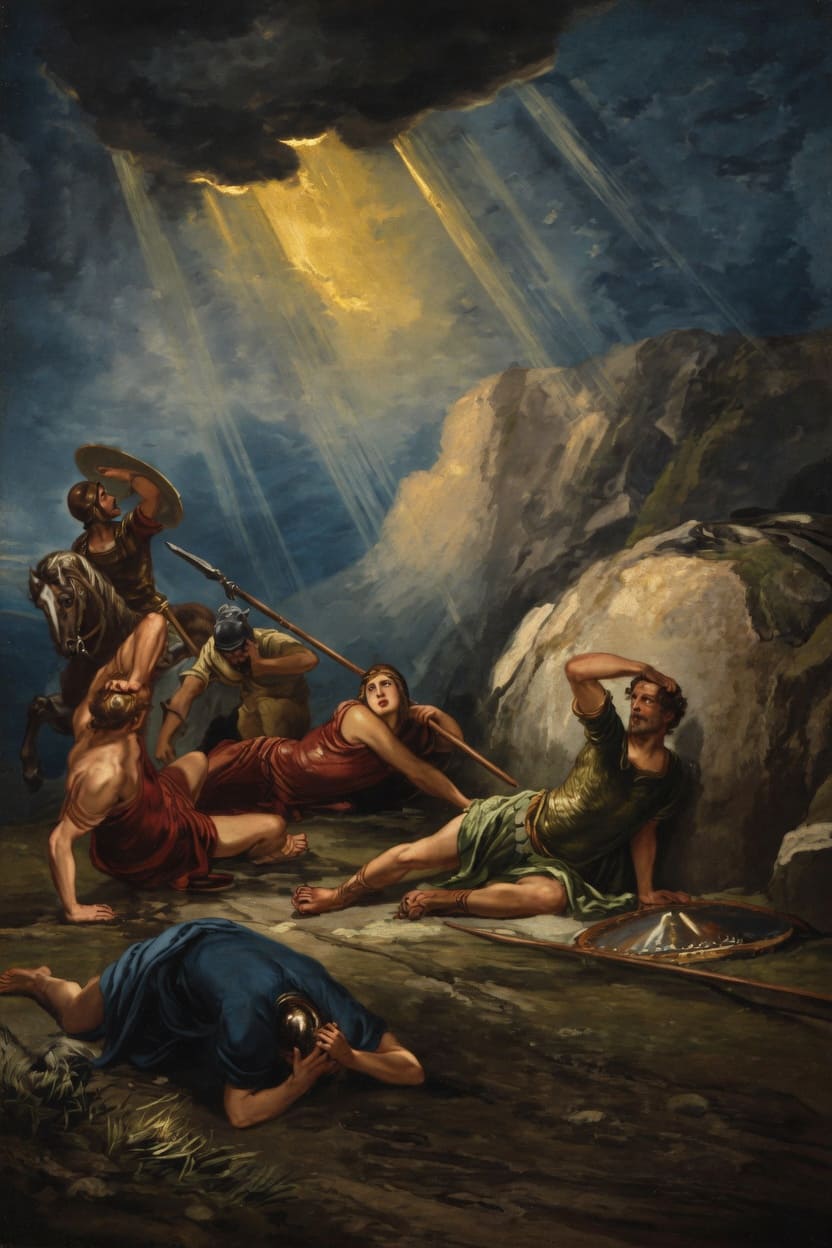
The Conversion Of Saul. “It is hard for thee to kick against the pricks.” Acts 9:5.
Baptism
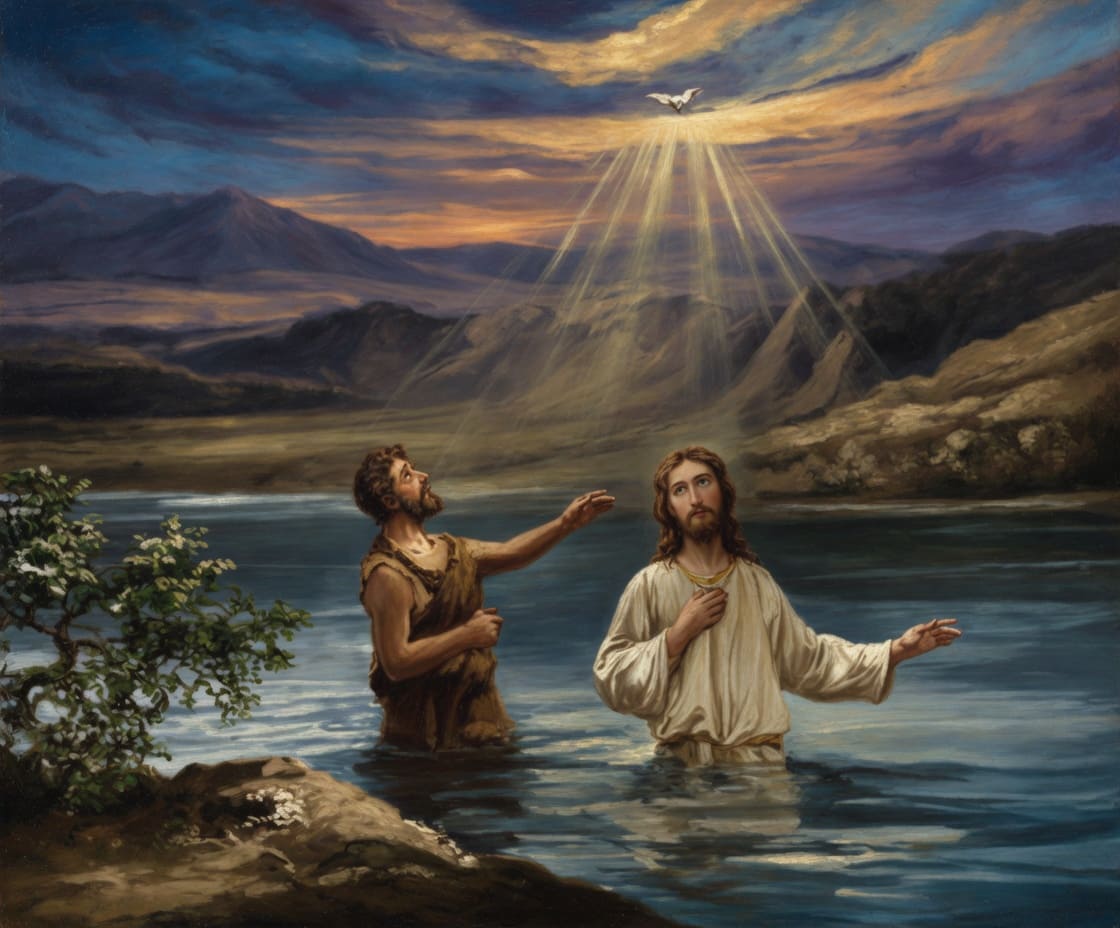
Baptism of Christ. “Thus it becometh us to fulfil all righteousness.” Matt. 3:15.
1. What ordinance is closely associated with believing the gospel?
“And He said unto them, Go ye into all the world, and preach the gospel to every creature. He that believeth and is baptized shall be saved; but he that believeth not shall be damned.” Mark 16:15, 16.
2. What did the apostle Peter associate with baptism in his instruction on the day of Pentecost?
“Then Peter said unto them, Repent, and be baptized every one of you in the name of Jesus Christ for the remission of sins.” Acts 2:38.
3. In reply to his inquiry concerning salvation, what was the Philippian jailer told to do?
“And they said, Believe on the Lord Jesus Christ, and thou shalt be saved, and thy house.” Acts 16:31.
4. What followed immediately after the jailer and his family had accepted Christ as their Saviour?
“And he took them [Paul and Silas] the same hour of the night, and washed their stripes; and was baptized, he and all his, straightway.” Verse 33.
5. In connection with Christian baptism, what is washed away?
“And now why tarriest thou? arise, and be baptized, and wash away thy sins, calling on the name of the Lord.” Acts 22:16. See Titus 3:5; 1 Peter 3:21.
6. By what means are sins washed away?
“Unto Him that loved us, and washed us from our sins in His own blood.” Rev. 1:5.
7. Into whose name are believers to be baptized?
“Go ye therefore, and make disciples of all the nations, baptizing them into the name of the Father and of the Son and of the Holy Ghost.” Matt. 28:19, R. V.
8. When believers are baptized into Christ, whom do they put on?
“For as many of you as have been baptized into Christ have put on Christ.” Gal. 3:27.
9. Into what experience are those baptized who are baptized into Christ?
“Know ye not, that so many of us as were baptized into Jesus Christ were baptized into His death?” Rom. 6:3.
NOTE.—Baptism is a gospel ordinance commemorating the death, burial, and resurrection of Christ. In baptism public testimony is given to the effect that the one baptized has been crucified with Christ, buried with Him, and is raised with Him to walk in newness of life. Only one mode of baptism can rightly represent these facts of experience, and that is immersion,—the mode followed by Christ and the primitive church.
10. How is such a baptism described?
“Therefore we are buried with Him by baptism into death: that like as Christ was raised up from the dead by the glory of the Father, even so we also should walk in newness of life.” Verse 4.
11. How fully are we thus united with Christ in His experience of death and resurrection?
“For if we have been planted together in the likeness of His death, we shall be also in the likeness of His resurrection.” Verse 5.
12. What will follow this union with Christ in His death and resurrection?
“Now if we be dead with Christ, we believe that we shall also live with Him.” Verse 8.
13. In what working of God is faith to be exercised in connection with baptism?
“Buried with Him in baptism, wherein also ye are risen with Him through the faith of the operation of God, who hath raised Him from the dead.” Col. 2:12.
14. At the beginning of His ministry, what example did Jesus set for the benefit of His followers?
“Then cometh Jesus from Galilee to Jordan unto John, to be baptized of him.” Matt. 3:13.
15. What remarkable experience attended the baptism of Jesus?
“And Jesus, when He was baptized, went up straightway out of the water: and, lo, the heavens were opened unto Him, and He saw the Spirit of God descending like a dove, and lighting upon Him: and lo a voice from heaven, saying, This is My beloved Son, in whom I am well pleased.” Verses 16, 17.
16. What promise is made to those who repent and are baptized?
“Then Peter said unto them, Repent, and be baptized every one of you in the name of Jesus Christ for the remission of sins, and ye shall receive the gift of the Holy Ghost.” Acts 2:38.
17. What question did the eunuch ask after Philip preached Jesus unto him?
“And as they went on their way, they came unto a certain water: and the eunuch said, See, here is water; what doth hinder me to be baptized?” Acts 8:36.
18. In order to baptize the eunuch, where did Philip take him?
“And he commanded the chariot to stand still: and they went down both into the water, both Philip and the eunuch; and he baptized him.” Verse 38.
19. How did the people of Samaria publicly testify to their faith in the preaching of Philip?
“But when they believed Philip preaching the things concerning the kingdom of God, and the name of Jesus Christ, they were baptized, both men and women.” Acts 8:12.
20. What instruction did the apostle Peter give concerning the Gentiles who had believed?
“Can any man forbid water, that these should not be baptized, which have received the Holy Ghost as well as we? And he commanded them to be baptized in the name of the Lord.” Acts 10:47, 48.
21. How perfect is the unity into which believers are brought by being baptized into Christ?
“For as the body is one, and hath many members, and all the members of that one body, being many, are one body: so also is Christ. For by one Spirit are we all baptized into one body, whether we be Jews or Gentiles, whether we be bond or free; and have been all made to drink into one Spirit.” 1 Cor. 12:12, 13.
22. After being united with Christ in the likeness of His death and resurrection, what should the believer do?
“If ye then be risen with Christ, seek those things which are above, where Christ sitteth on the right hand of God.” Col. 3:1.
Reconciled to God
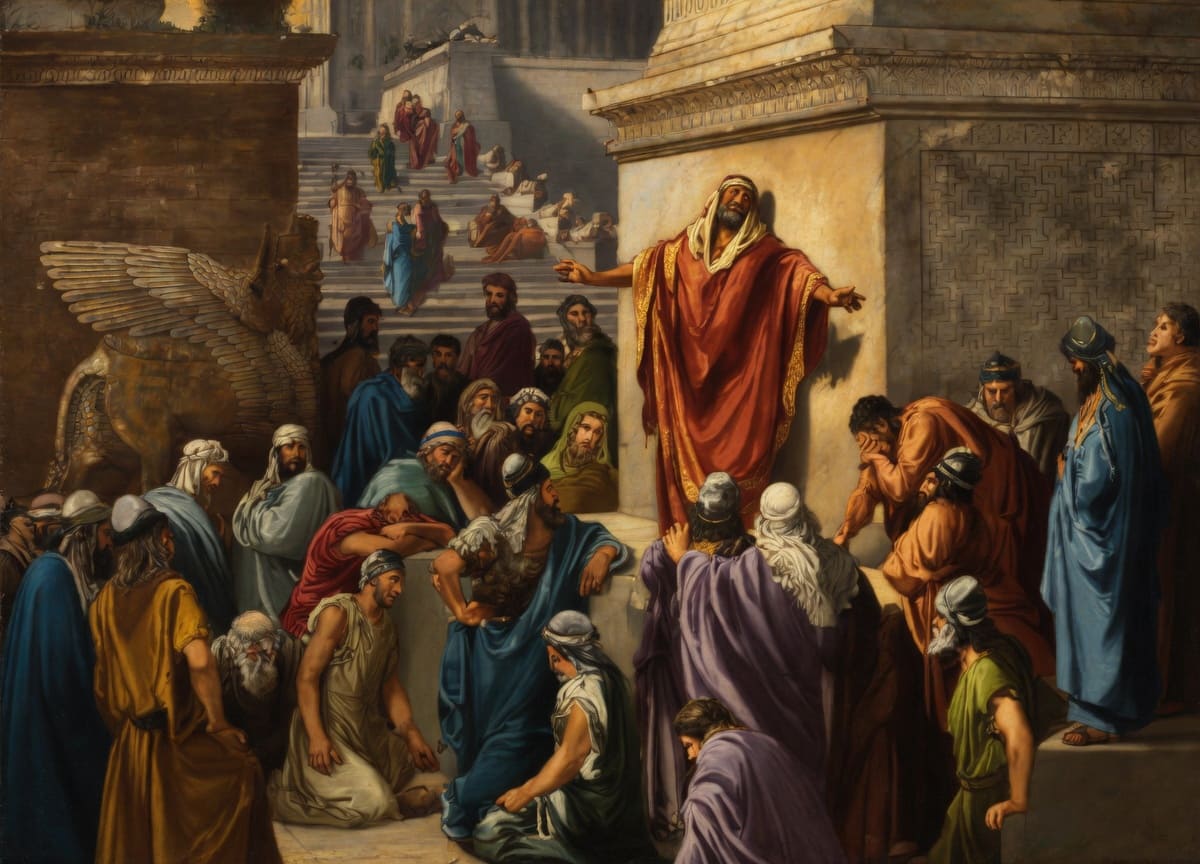
Jonah Preaching To The Ninevites. “Be ye reconciled to God.” 2 Cor. 5:20.
1. What message of entreaty has God sent to us through his appointed messengers?
“Now then we are ambassadors for Christ, as though God did beseech you by us: we pray you in Christ’s stead, be ye reconciled to God.” 2 Cor. 5:20.
2. Through whom is this reconciliation made?
“All things are of God, who hath reconciled us to Himself by Jesus Christ, and hath given to us the ministry of reconciliation.” Verse 18.
3. What was required in order to effect this reconciliation?
“For if, when we were enemies, we were reconciled to God by the death of His Son, much more, being reconciled, we shall be saved by His life.” Rom. 5:10.
4. What basis for reconciliation was made by Christ’s death?
“Having made peace through the blood of His cross, by Him to reconcile all things unto Himself.” Col. 1:20.
5. Through whom is the reconciliation received?
“We also joy in God through our Lord Jesus Christ, by whom we have now received the atonement [reconciliation, margin].” Rom. 5:11.
6. By what union does Christ reconcile both Jew and Gentile to God through the cross?
“And that He might reconcile both unto God in one body by the cross, having slain the enmity thereby.” Eph. 2:16.
7. In what prophecy was the work of reconciliation foretold?
“Seventy weeks are determined upon thy people and upon thy holy city, to finish the transgression, and to make an end of sins, and to make reconciliation for iniquity.” Dan. 9:24.
8. In thus reconciling the world unto Himself, what attitude did God take toward men?
“God was in Christ, reconciling the world unto Himself, not imputing their trespasses unto them.” 2 Cor. 5:19.
9. What rendered it possible for God to treat sinners thus?
“All we like sheep have gone astray; we have turned every one to his own way; and the Lord hath laid on Him the iniquity of us all.” Isa. 53:6.
10. What was Christ made, to release men from sin?
“For He hath made Him to be sin for us, who knew no sin; that we might be made the righteousness of God in Him.” 2 Cor. 5:21.
11. How was He treated?
“But He was wounded for our transgressions, He was bruised for our iniquities: the chastisement of our peace was upon Him; and with His stripes we are healed.” Isa. 53:5.
12. What did John declare concerning Him?
“Behold the Lamb of God, which taketh away [beareth, margin] the sin of the world.” John 1:29.
13. To what place did Christ carry these sins?
“Who His own self bare our sins in His own body on the tree, that we, being dead to sins, should live unto righteousness: by whose stripes ye were healed.” 1 Peter 2:24.
14. What is the great purpose of Christ in His work of reconciliation?
“And you, that were sometime alienated and enemies in your mind by wicked works, yet now hath He reconciled in the body of His flesh through death, to present you holy and unblamable and unreprovable in His sight.” Col. 1:21, 22.
Acceptance With God
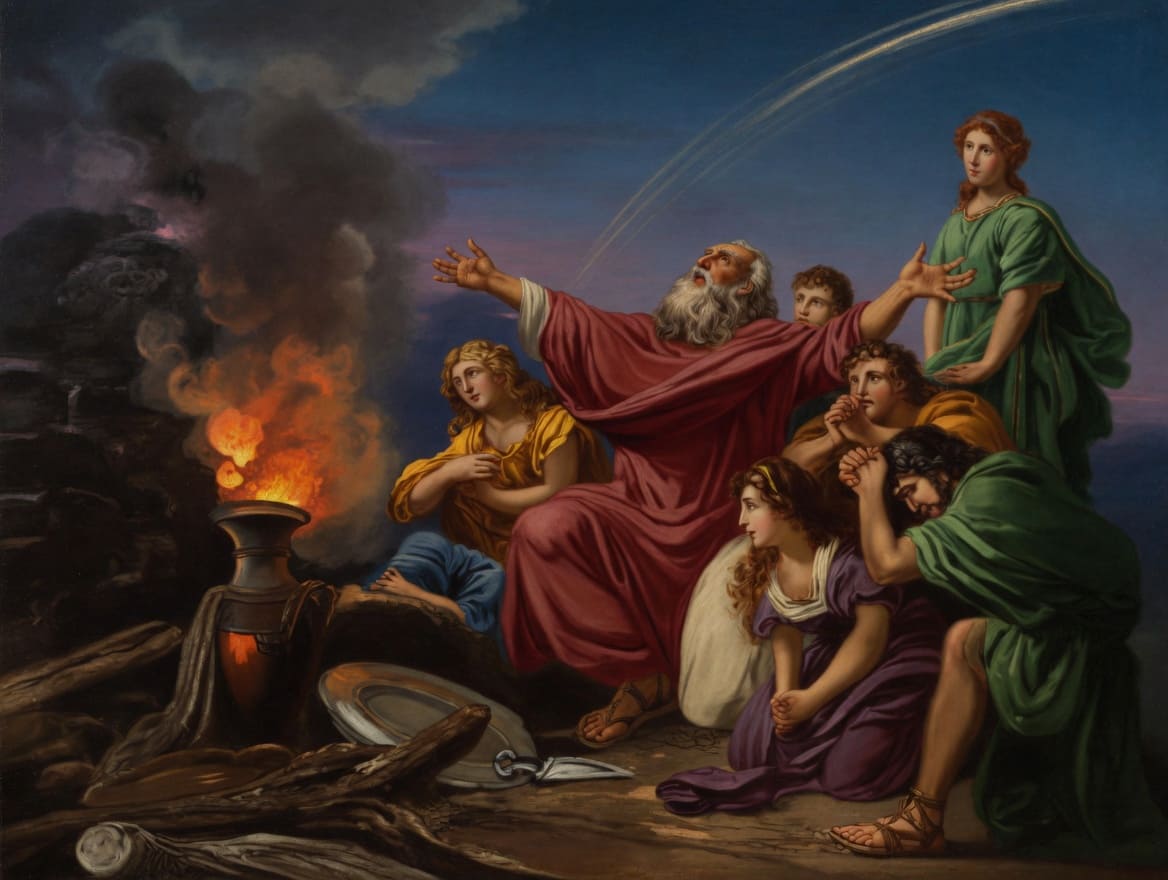
Noah’s Sacrifice. “He hath made us accepted in the Beloved.” Eph. 1:6.
1. In whom has God made us accepted?
“Blessed be the God and Father of our Lord Jesus Christ, who hath blessed us with all spiritual blessings … in Christ: according as He hath chosen us in Him … to the praise of the glory of His grace, wherein He hath made us accepted in the Beloved.” Eph. 1:3-6.
2. What great gift comes with our acceptance of Christ?
“And this is the will of Him that sent Me, that every one which seeth the Son, and believeth on Him, may have everlasting life: and I will raise him up at the last day.” John 6:40. See also John 17:2.
3. What is the first and primary evidence of our acceptance with God?
“If we receive the witness of men, the witness of God is greater: for this is the witness of God which He hath testified of His Son…. And this is the record, that God hath given to us eternal life, and this life is in His Son.” 1 John 5:9-11.
NOTE.—The primary basis of all faith and acceptance is the word of God,—that which God Himself has said. To receive and believe this is the first essential to salvation,—the first evidence of acceptance.
4. Why did John write his testimony concerning God’s love and purpose in giving Christ?
“These things have I written unto you that believe on the name of the Son of God; that ye may know that ye have eternal life, and that ye may believe on the name of the Son of God.” Verse 13. “These are written, that ye might believe that Jesus is the Christ, the Son of God; and that believing ye might have life through His name.” John 20:31.
5. What witness does the true believer in Christ have that he is accepted of God?
“He that believeth on the Son of God hath the witness in himself: he that believeth not God hath made Him a liar; because he believeth not the record that God gave of His Son.” 1 John 5:10.
NOTE.—Faith and feeling should not be confounded. Faith is ours to exercise in the Word of God, regardless of our feelings, and often in opposition even to our feelings. Many fail to accept the pardon and assurance of the acceptance of Heaven, because they do not take God at His word, but instead turn their attention to their changeable moods and feelings. Faith always precedes the joyful feelings which naturally result from the assurance of forgiveness and acceptance. This order is never reversed.
6. How only do any become children of God?
“Ye are all the children of God by faith in Christ Jesus.” Gal. 3:26.
7. What is the foundation of faith?
“Faith cometh by hearing, and hearing by the word of God.” Rom. 10:17.
8. What assurance has the believer of his union with God?
“Hereby know we that we dwell in Him, and He in us, because He hath given us of His Spirit.” 1 John 4:13.
9. What three definite witnesses of acceptance are mentioned by John?
“There are three that bear witness in earth, the Spirit, and the water, and the blood: and these three agree in one.” 1 John 5:8.
10. How does the Spirit witness to our acceptance with God?
“Because ye are sons, God hath sent forth the Spirit of His Son into your hearts, crying, Abba, Father.” Gal. 4:6. “The Spirit itself beareth witness with our spirit, that we are the children of God.” Rom. 8:16.
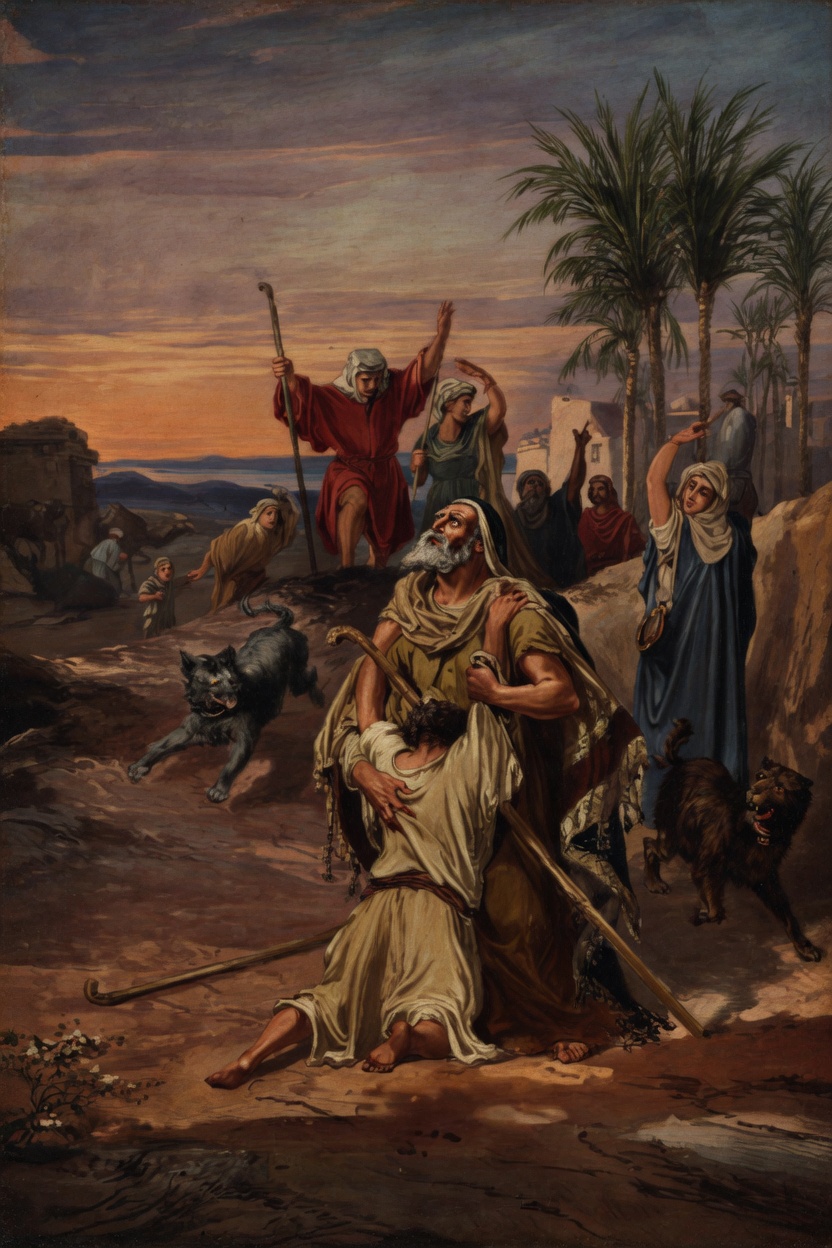
The Prodigal’s Return. “This my son was dead, and is alive again; he was lost, and is found.” Luke 15:24.
11. Of what is Christian baptism an evidence?
“As many of you as have been baptized into Christ have put on Christ.” Gal. 3:27.
NOTE.—In baptism, the water and the Spirit both bear witness of God’s acceptance. The same Spirit which, at Christ’s baptism, said, “This is My beloved Son, in whom I am well pleased,” witnesses to the acceptance of every sincere believer at his baptism.
12. To what does the blood of Christ witness?
“These things write we unto you, that your joy may be full…. If we walk in the light, as He is in the light, we have fellowship one with another, and the blood of Jesus Christ His Son cleanseth us from all sin.” 1 John 1:4-7. “In whom we have redemption through His blood, the forgiveness of sins.” Eph. 1:7. See also Rev. 1:5, 6.
13. When may we find acceptance with God through Christ?
“I have heard thee in a time accepted, and in the day of salvation have I succored thee: behold, now is the accepted time; behold, now is the day of salvation.” 2 Cor. 6:2.
14. To whom, therefore, should we ascribe glory and honor?
“Unto Him that loved us, and washed us from our sins in His own blood, and hath made us kings and priests unto God and His Father; to Him be glory and dominion forever and ever. Amen.” Rev. 1:5, 6.
15. What is another evidence of divine acceptance?
“We know that we have passed from death unto life, because we love the brethren.” 1 John 3:14.
16. What blessed assurance is given all believers in Christ?
“And the peace of God, which passeth all understanding, shall keep your hearts and minds through Christ Jesus.” Phil. 4:7.
Justification By Faith
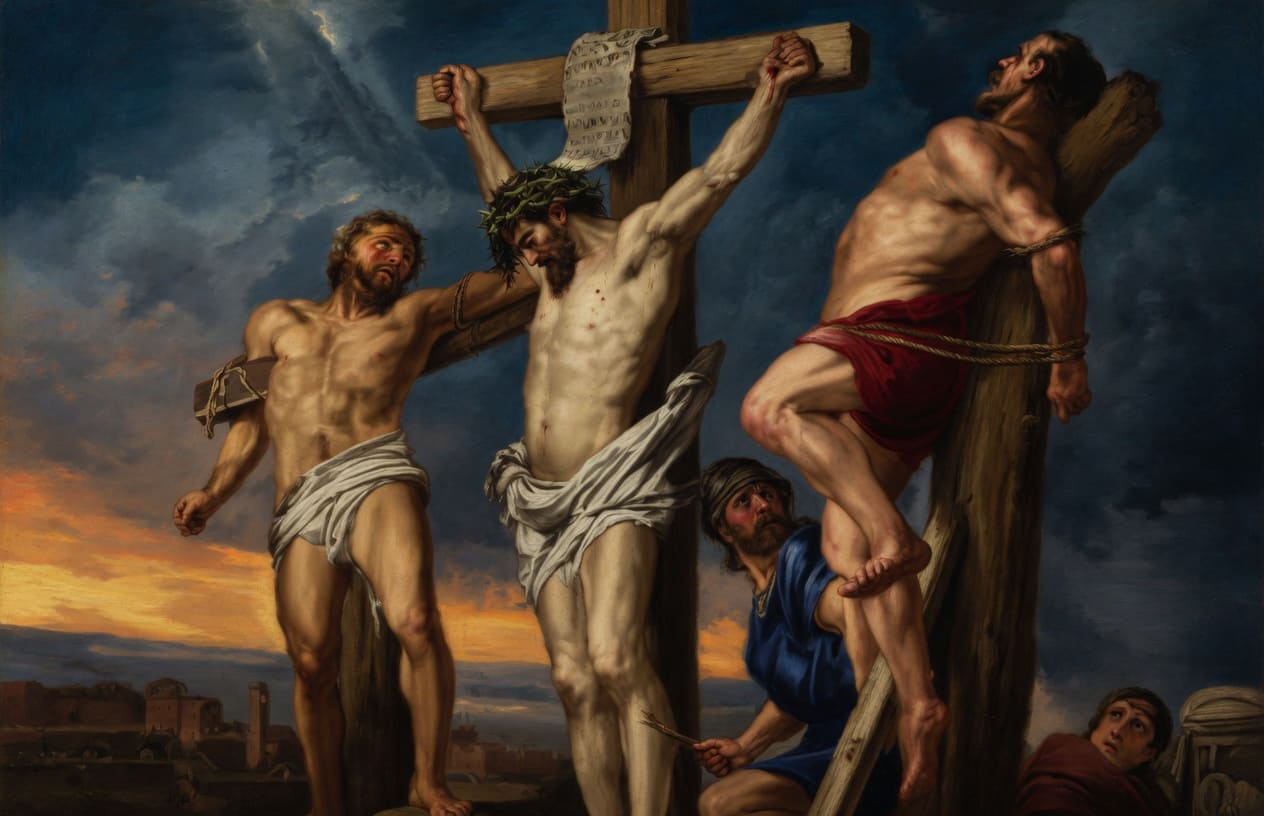
The Penitent Thief. “Thou shalt be with Me in paradise.” Luke 23:43.
1. What is the ground of justification on God’s part?
“That being justified by His grace, we should be made heirs according to the hope of eternal life.” Titus 3:7.
2. What is the means through which this justifying grace is made available to the sinner?
“Much more then, being now justified by His [Christ’s] blood, we shall be saved from wrath through Him.” Rom. 5:9.
3. How is justification laid hold upon?
“Therefore we conclude that a man is justified by faith without the deeds of the law.” Rom. 3:28.
4. What is the only way sinners may be justified, or made righteous?
“Knowing that a man is not justified by the works of the law, but by the faith of Jesus Christ, even we have believed in Jesus Christ, that we might be justified by the faith of Christ, and not by the works of the law: for by the works of the law shall no flesh be justified.” Gal. 2:16.
5. What concrete example makes clear the meaning of this doctrine?
“And He brought him [Abraham] forth abroad, and said, Look now toward heaven, and tell the stars, if thou be able to number them: and He said unto him, So shall thy seed be. And he believed in the Lord; and He counted it to him for righteousness.” Gen. 15:5, 6.
6. How is the righteousness thus obtained described?
“And be found in Him, not having thine own righteousness, which is of the law, but that which is through the faith of Christ, the righteousness which is of God by faith.” Phil. 3:9.
7. Upon what basis is justification granted?
“And not as it was by one that sinned, so is the gift: for the judgment was by one to condemnation, but the free gift is of many offenses unto justification.” Rom. 5:16.
8. Upon what basis does the reward come to one who works?
“Now to him that worketh is the reward not reckoned of grace, but of debt.” Rom. 4:4.
9. Upon what condition is faith reckoned for righteousness?
“But to him that worketh not, but believeth on Him that justifieth the ungodly, his faith is counted for righteousness.” Verse 5.
10. How does grace, as the ground of justification, exclude righteousness by works?
“And if by grace, then is it no more of works: otherwise grace is no more grace. But if it be of works, then is it no more grace: otherwise work is no more work.” Rom. 11:6.
11. In what way are both Jews and Gentiles to be justified?
“Is He the God of the Jews only? is He not also of the Gentiles? Yes, of the Gentiles also: seeing it is one God, which shall justify the circumcision by faith, and uncircumcision through faith.” Rom. 3:29, 30.
12. What statement testifies to Abraham’s faith in God?
“He staggered not at the promise of God through unbelief; but was strong in faith, giving glory to God; and being fully persuaded that what He had promised, He was able also to perform.” Rom. 4:20, 21.
13. What did this bring to him?
“And therefore it was imputed to him for righteousness.” Verse 22.
14. How may we receive this same imputed righteousness?
“Now it was not written for his sake alone, that it was imputed to him; but for us also, to whom it shall be imputed, if we believe on Him that raised up Jesus our Lord from the dead.” Verses 23, 24.
15. Why must justifying faith lay hold upon both the death and the resurrection of Christ?
“Who was delivered for our offenses, and was raised again for our justification.” Verse 25. See 1 Cor. 15:17.
NOTE.—The resurrection of Christ, the promised Seed (Gal. 3:16), was necessary in order to fulfill to Abraham the promise of an innumerable seed; and therefore Abraham’s faith in the promise of God, which included the resurrection, was reckoned to him for righteousness. His faith laid hold upon that which made imputed righteousness possible. See Heb. 11:17-19.
16. What is inseparable from the experience of justification by faith?
“Be it known unto you therefore, men and brethren, that through this man is preached unto you the forgiveness of sins: and by Him all that believe are justified from all things, from which ye could not be justified by the law of Moses.” Acts 13:38, 39.
17. How has Christ made it possible for righteousness to be imputed to the believer?
“For as by one man’s disobedience many were made sinners, so by the obedience of one shall many be made righteous.” Rom. 5:19.
18. What prophetic declaration foretold this truth?
“In the Lord shall all the seed of Israel be justified, and shall glory.” Isa. 45:25.
19. What other prediction asserts the same great truth?
“By His knowledge shall My righteous servant justify many; for He shall bear their iniquities.” Isa. 5:11.
20. What does the imputed righteousness of Christ enable God to do, and still be just?
“To declare, I say, at this time His righteousness: that He might be just, and the justifier of him which believeth in Jesus.” Rom. 3:26.
21. By what name is Christ appropriately called?
“Behold, the days come, saith the Lord, that I will raise unto David a righteous Branch, and a King shall reign and prosper, and shall execute judgment and justice in the earth. In His days Judah shall be saved, and Israel shall dwell safely and this is His name whereby He shall be called, THE LORD OUR RIGHTEOUSNESS.” Jer. 23:5, 6.
22. What blessed experience follows upon the acceptance of Christ as our righteousness?
“Therefore being justified by faith, we have peace with God through our Lord Jesus Christ.” Rom. 5:1.
23. What does Christ thus become to the believer?
“For He is our peace, who hath made both one, and hath broken down the middle wall of partition between us.” Eph. 2:14.
24. On what basis is there no possibility of justification for the sinner?
“Therefore by the deeds of the law there shall no flesh be justified in His sight: for by the law is the knowledge of sin.” Rom. 3:20.
25. How does the death of Christ bear testimony to this?
“I do not frustrate the grace of God: for if righteousness come by the law, then Christ is dead in vain.” Gal. 2:21.
26. What is proved by any attempt to be justified by the law?
“Christ is become of no effect unto you, whosoever of you are justified by the law; ye are fallen from grace.” Gal. 5:4.
27. Why did Israel fail to attain unto righteousness?
“But Israel, which followed after the law of righteousness, hath not attained to the law of righteousness. Wherefore? Because they sought it not by faith, but as it were by the works of the law. For they stumbled at that stumbling-stone.” Rom. 9:31, 32.
28. What is revealed by the law?
“By the law is the knowledge of sin.” Rom. 3:20
29. What bears witness to the genuineness of the righteousness obtained by faith, apart from the deeds of the law?
“But now the righteousness of God without the law is manifested, being witnessed by the law and the prophets.” Verse 21.
30. Does faith set aside the law of God?
“Do we then make void the law through faith? God forbid: yea, we establish the law.” Verse 31.
31. What scripture shows that the righteousness which is received by grace through faith must not be made an excuse for continuing in sin?
“What shall we say then? Shall we continue in sin, that grace may abound? God forbid. How shall we, that are dead to sin, live any longer therein?” Rom. 6:1, 2.
32. Does faith exclude works?
“But wilt thou know, O vain man, that faith without works is dead?” James 2:20.
33. What is the evidence of genuine, living faith?
“Show me thy faith without thy works, and I will show thee my faith by my works.” Verse 18.
34. What, then, are the visible proofs of genuine justification by faith?
“Ye see then how that by works a man is justified, and not by faith only.” Verse 24. See also verse 22.
35. What great exchange has been wrought for us in Christ?
“For He hath made Him to be sin for us, who knew no sin; that we might be made the righteousness of God in Him.” 2 Cor. 5:21.
NOTE. — Said Luther: “Learn to know Christ and Him crucified. Learn to sing a new song—to despair of your own works, and to cry unto Him, Lord Jesus, Thou art my righteousness, and I am Thy sin. Thou hast taken upon Thee what was mine, and given to me what was Thine; what Thou wast not Thou becamest, that I might become what I was not.” — D’Aubigné’s “History of the Reformation,” book 2, chap. 8.
Righteousness and Life
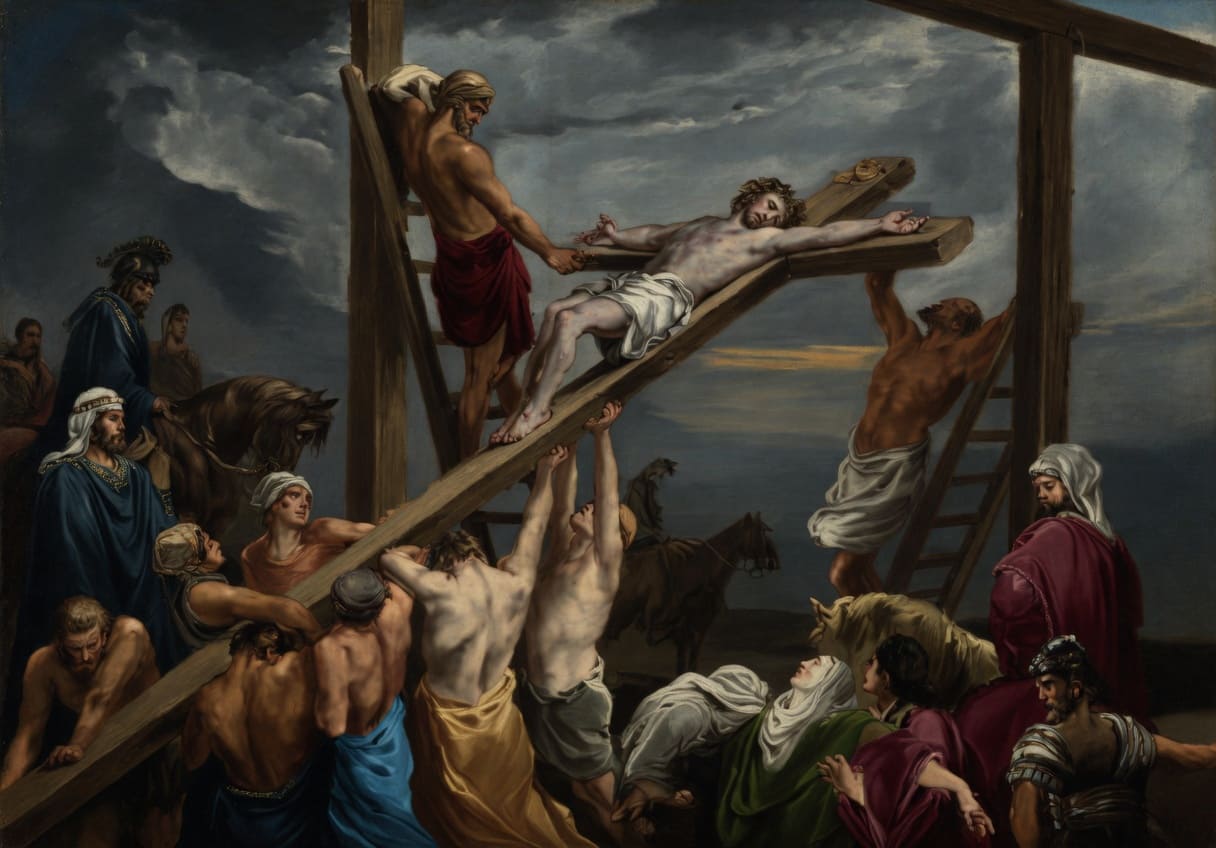
The Lord Our Righteousness. “He that hath the Son hath life.” 1 John 5:12.
1. What is assured to the believer in Christ?
“For God so loved the world, that He gave His only begotten Son, that whosoever believeth in Him should not perish, but have everlasting life.” John 3:16.
2. What is revealed in the gospel?
“For therein is the righteousness of God revealed from faith to faith: as it is written, The just shall live by faith.” Rom. 1:17.
3. What has Christ brought to light through the gospel?
“Who hath abolished death, and hath brought life and immortality to light through the gospel.” 2 Tim. 1:10.
4. How closely are righteousness and life thus united?
“In the way of righteousness is life; and in the pathway thereof there is no death.” Prov. 12:28.
5. What does he find who follows after righteousness?
“He that followeth after righteousness and mercy findeth life, righteousness, and honor.” Prov. 21:21.
6. Through what does grace reign unto eternal life?
“That as sin hath reigned unto death, even so might grace reign through righteousness unto eternal life by Jesus Christ our Lord.” Rom. 5:21.
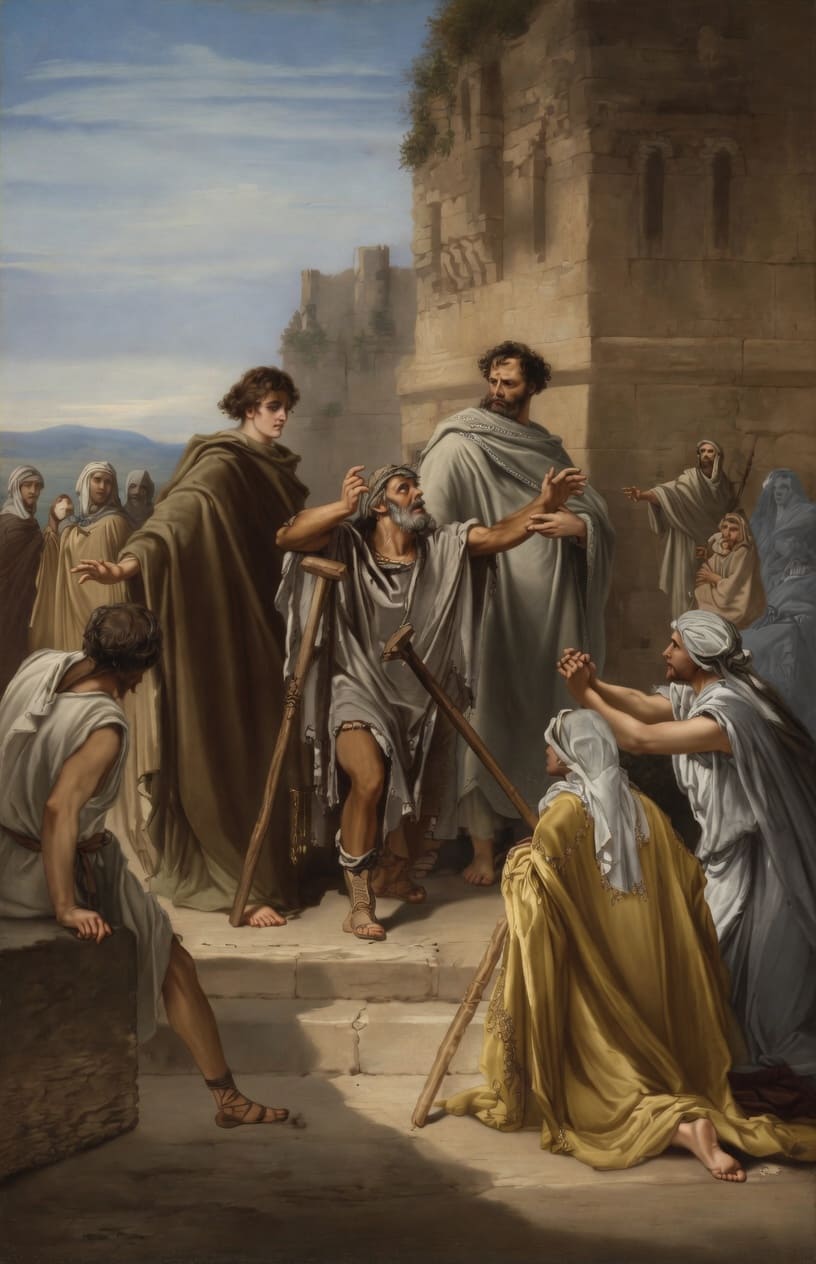
Healing The Lame Man. “In the name of Jesus Christ of Nazareth rise up and walk.” Acts 3:6.
7. What is the very life of the Spirit?
“And if Christ be in you, the body is dead because of sin; but the Spirit is life because of righteousness.” Rom. 8:10.
8. What are the commandments of God declared to be?
“All Thy commandments are righteousness.” Ps. 119:172.
9. What did Jesus declare God’s commandment to be?
“And I know that His commandment is life everlasting.” John 12:50.
NOTE.—Life and righteousness are thus shown to be inseparable.
10. What does the prophet Jeremiah declare Christ to be?
“And this is His name whereby He shall be called, THE LORD OUR RIGHTEOUSNESS.” Jer. 23:6.
11. What does Christ declare Himself to be?
“I am the way, the truth, and the life.” John 14:6.
12. How is righteousness received?
“For if by one man’s offense death reigned by one; much more they which receive abundance of grace and of the gift of righteousness shall reign in life by one, Jesus Christ.” Rom. 5:17.
13. How is eternal life bestowed?
“For the wages of sin is death; but the gift of God is eternal life through Jesus Christ our Lord.” Rom. 6:23.
14. What did Moses set forth as the basis of righteousness?
“And it shall be our righteousness, if we observe to do all these commandments before the Lord our God, as He hath commanded us.” Deut. 6:25.
15. What did Christ indicate as essential to eternal life?
“And He said unto him, Why callest thou Me good? there is none good but one, that is, God: but if thou wilt enter into life, keep the commandments.” Matt. 19:17.
NOTE.—The righteousness of God, which is obtained by faith in Christ, brings with it the life of God, which is inseparably connected with righteousness; and the life of God, which is bestowed upon man as a gift through his faith in Christ, is a life of righteousness,—the righteousness, or right-doing, of Christ.
Consecration
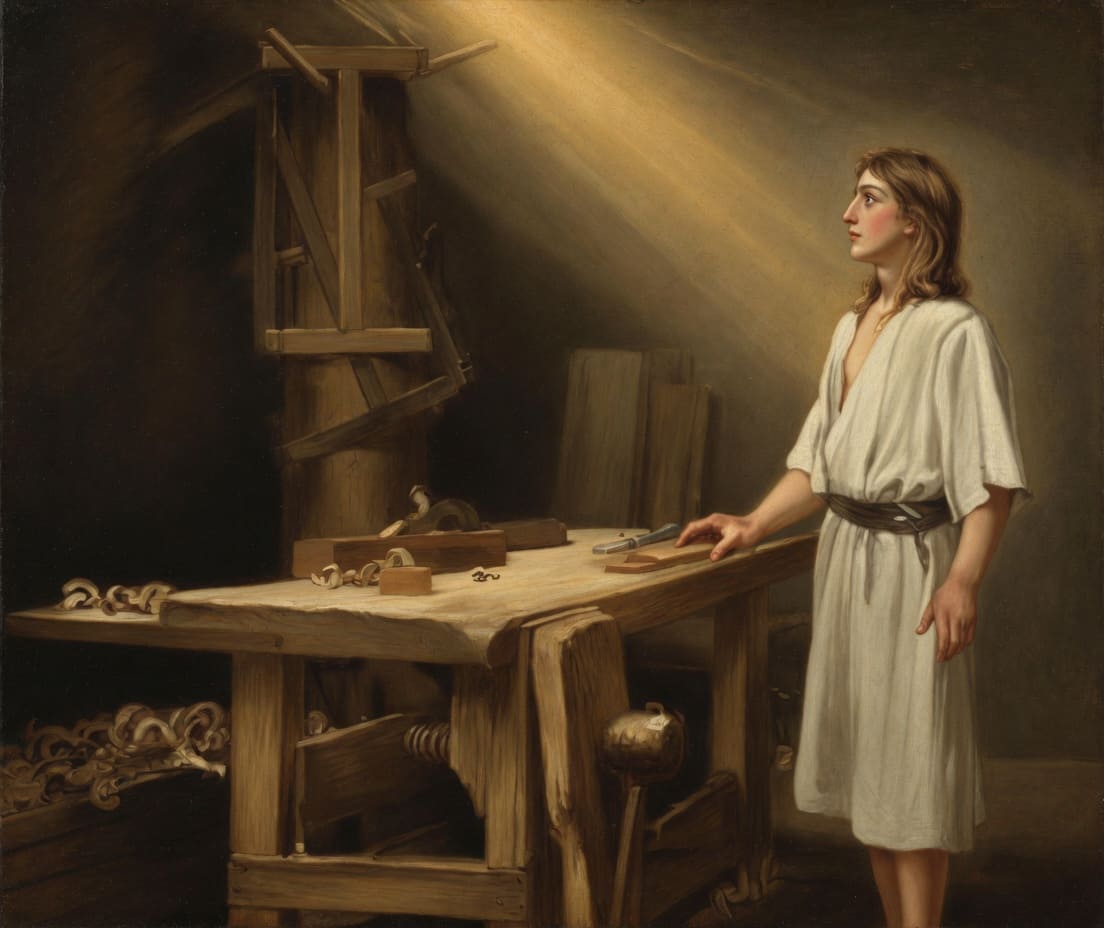
The Carpenter’s Son. “Let this mind be in you, which was also in Christ Jesus.” Phil. 2:5.
1. What offering did King Hezekiah command to be made when he reestablished the worship of the temple?
“And Hezekiah commanded to offer the burnt offering upon the altar. And when the burnt offering began, the song of the Lord began also with the trumpets, and with the instruments ordained by David king of Israel.” 2 Chron. 29:27.
2. After the people had united in this service, how did Hezekiah interpret its meaning?
“Then Hezekiah answered and said, Now ye have consecrated yourselves unto the Lord, come near and bring sacrifices and thank-offerings into the house of the Lord. And the congregation brought in sacrifices and thank-offerings; and as many as were of a free heart burnt offerings.” Verse 31.
Note.—The morning and the evening burnt offering, or the continual offering (Ex. 29:42), symbolized the daily consecration of the people to the Lord.
3. How is this consecration urged upon all Christians?
“I beseech you therefore, brethren, by the mercies of God, that ye present your bodies a living sacrifice, holy, acceptable unto God, which is your reasonable service.” Rom. 12:1.
4. What is the continual sacrifice of praise declared to be?
“Through Him then let us offer up a sacrifice of praise to God continually, that is, the fruit of lips which make confession to His name.” Heb. 13:15, R. V.
5. How is the service of consecration to be carried forward by the Christian church?
“Ye also, as lively stones, are built up a spiritual house, an holy priesthood, to offer up spiritual sacrifices, acceptable to God by Jesus Christ.” 1 Peter 2:5.
6. Who has set the example of complete consecration?
“And whosoever will be chief among you, let him be your servant: even as the Son of man came not to be ministered unto, but to minister, and to give His life a ransom for many.” Matt. 20: 27, 28.
7. What position has Jesus taken among His brethren?
“For whether is greater, he that sitteth at meat, or he that serveth? is not he that sitteth at meat? but I am among you as he that serveth.” Luke 22:27.
8. In what does likeness to Christ consist?
“Let this mind be in you, which was also in Christ Jesus.” Phil. 2:5.
9. What did Christ’s spirit of meekness and consecration lead Him to do?
“But made Himself of no reputation, and took upon Him the form of a servant, and was made in the likeness of men.” Verse 7.
10. To what extent did Christ humble Himself?
“And being found in fashion as a man, He humbled Himself, and became obedient unto death, even the death of the cross.” Verse 8.
11. How does He exhort us to the same consecration?
“Take My yoke upon you, and learn of Me; for I am meek and lowly in heart: and ye shall find rest unto your souls.” Matt. 11:29.
12. What does He make the condition of discipleship?
“So likewise, whosoever he be of you that forsaketh not all that he hath, he cannot be My disciple.” Luke 14:33.
13. What is proof that one does not belong to Christ?
“If any man have not the Spirit of Christ, he is none of His.” Rom. 8:9.
14. How should he walk who professes to abide in Christ?
“He that saith he abideth in Him ought himself also so to walk, even as He walked.” 1 John 2:6.
15. Do we belong to ourselves?
“Know ye not that … ye are not your own? for ye are bought with a price.” 1 Cor. 6:19, 20.
16. What are we therefore exhorted to do?
“Therefore glorify God in your body, and in your spirit, which are God’s.” Verse 20.
Note.—Our time, strength, and means are God’s, and should be given to His service.
17. Of what are the bodies of Christians the temple?
“What? know ye not that your body is the temple of the Holy Ghost which is in you, which ye have of God?” Verse 19.
18. When truly consecrated, for what is one ready?
“Also I heard the voice of the Lord, saying, Whom shall I send, and who will go for us? Then said I, Here am I; send me.” Isa. 6:8.
19. How is this willingness for service otherwise expressed?
“Behold, as the eyes of servants look unto the hand of their masters, and as the eyes of a maiden unto the hand of her mistress; so our eyes wait upon the Lord our God.” Ps. 123:2.
Bible Election
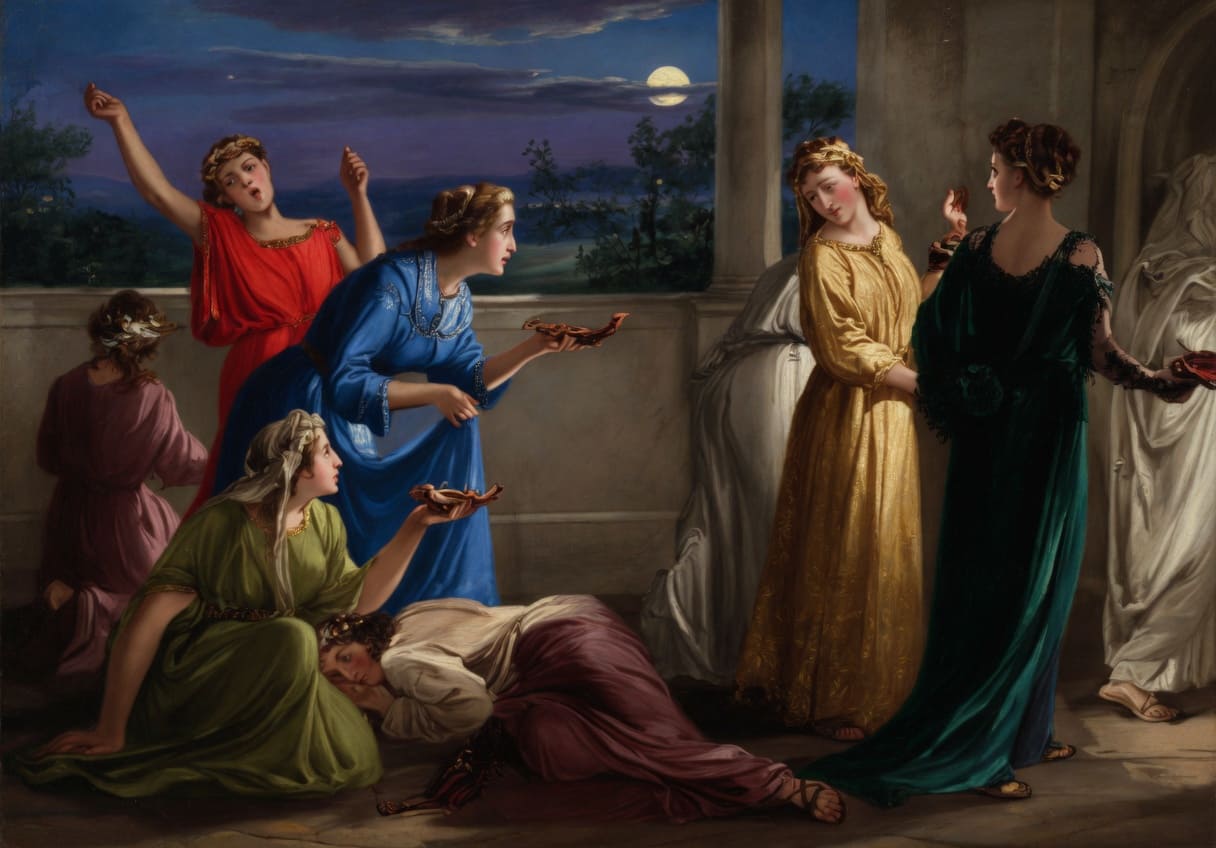
The Ten Virgins. “They that were ready went in with him to the marriage.” Matt. 25:10.
1. What does the apostle Peter admonish us to do?
“Wherefore … brethren, give diligence to make your calling and election sure.” 2 Peter 1:10.
Note.—This text at once reveals the fact that our salvation, so far as our own individual cases are concerned, is dependent upon our own action. We are elected to be saved; but we are to give diligence to make this election sure. If we do not, it will not meet its purpose in our case, and we shall be lost.
2. What admonition given by Christ teaches the same truth?
“Behold, I come quickly: hold that fast which thou hast, that no man take thy crown.” Rev. 3:11.
Note.—Crowns have been prepared for each of the finally redeemed. Every soul is a candidate in the race for eternal life, and hence for a crown. Faith in Jesus, and perseverance to the end, will hold it fast.
3. Upon what condition is the crown of life promised?
“Be thou faithful unto death, and I will give thee a crown of life.” Rev. 2:10.
4. In whom, and from what time, have we been chosen unto holiness and salvation?
“According as He hath chosen us in Him [Christ] before the foundation of the world.” Eph. 1:4, first part.
5. What is the character of those thus chosen before the foundation of the world?
“That we should be holy and without blemish before Him in love.” Same verse, last part, R. V.
6. To what has God foreordained those who attain to this character?
“Having foreordained us unto adoption as sons through Jesus Christ unto Himself.” Verse 5, R. V.
7. According to what does God call us?
“And we know that all things work together for good to them that love God, to them who are the called according to His purpose.” Rom. 8:28.
8. According to what have we been predestinated?
“Being predestinated according to the purpose of Him who worketh all things after the counsel of His own will.” Eph. 1:11.
9. How many does God desire to be saved?
“Who will have all men to be saved, and to come unto the knowledge of the truth.” 1 Tim. 2:4.
10. Upon what condition is salvation offered?
“Believe on the Lord Jesus Christ, and thou shalt be saved.” Acts 16:31.
11. For how long must this faith be preserved in order to bring final salvation?
“He that shall endure unto the end, the same shall be saved.” Matt. 24:13. See James 1:12; Rev. 2:10.
12. What scripture is sometimes cited as evidence that God is arbitrary in His dealings with men?
“Therefore hath He mercy on whom He will have mercy, and whom He will He hardeneth.” Rom. 9:18.
13. But what other scripture shows with whom God wills to be merciful, and with whom otherwise?
“With the merciful Thou wilt show Thyself merciful; with an upright man Thou wilt show Thyself upright; with the pure Thou wilt show Thyself pure; and with the froward Thou wilt show Thyself froward.” Ps. 18:25, 26. See also Isa. 55:7.
Note.—God wills that men shall be saved. He has foreordained the characters that will entitle men to salvation, but He does not compel any one to receive Christ, possess this character, and be saved. This is a matter of individual choice. By His mighty acts and judgments in Egypt, God “hardened Pharaoh’s heart.” Ex. 7:3, 13, 22. But the same manifestations softened the hearts of others. The difference was in the hearts, and in the way God’s message and dealings were received; not in God. The same sun which melts the wax hardens the clay. Ex. 8:32 says that Pharaoh hardened his own heart.
14. What, on man’s part, is essential to salvation?
“Choose ye this day whom ye will serve.” Joshua 24:15. “If any man willeth to do His will, he shall know of the teaching.” John 7:17, R. V. “Believe on the Lord Jesus Christ, and thou shalt be saved.” Acts 16:31. “Whosoever will, let him take the water of life freely.” Rev. 22:17.
15. In what fact may every believer rejoice?
“But rejoice that your names are written in heaven.” Luke 10:20, R. V.
16. Whose names are to be retained in the book of life?
“He that overcometh, … I will not blot out his name out of the book of life.” Rev. 3:5.
Bible Sanctification
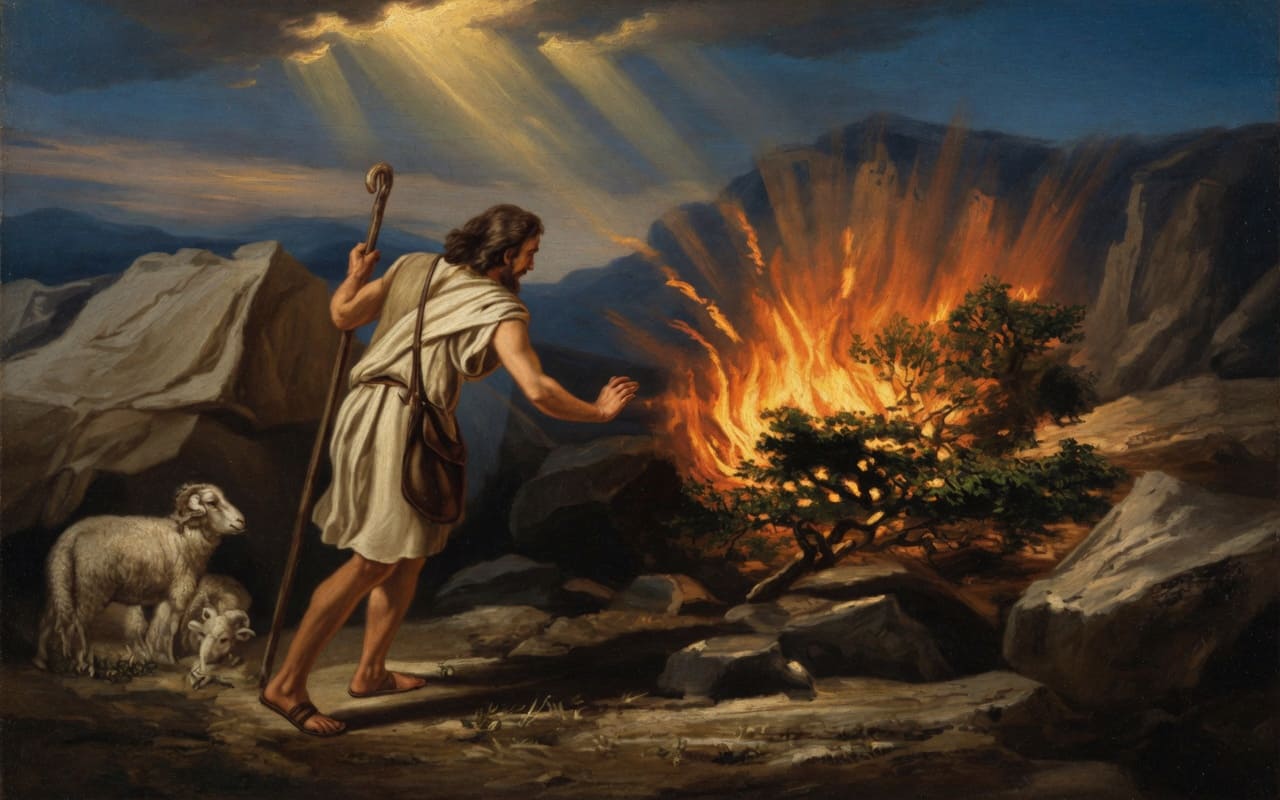
Moses At The Burning Bush. “The place whereon thou standest is holy ground.” Ex. 3:5.
1. What inspired prayer sets the standard of Christian experience?
“And the very God of peace sanctify you wholly; and I pray God your whole spirit and soul and body be preserved blameless unto the coming of our Lord Jesus Christ.” 1 Thess. 5:23.
2. How necessary is the experience of sanctification?
“Follow after peace with all men, and the sanctification without which no man shall see the Lord.” Heb. 12:14, R. V.
3. What encouragement is held out as an aid in attaining this experience?
“For this is the will of God, even your sanctification.” 1 Thess. 4:3.
Note.—Whatever is the will of God concerning us can be realized in our experience if our wills are in harmony with His will. It is therefore a matter of great encouragement to know that our sanctification is included in the will of God.
4. What distinct purpose did Christ have in giving Himself for the church?
“Husbands, love your wives, even as Christ also loved the church, and gave Himself for it; that He might sanctify and cleanse it with the washing of water by the word.” Eph. 5:25, 26.
5. What kind of church would He thus be able to present to Himself?
“That He might present it to Himself a glorious church, not having spot, or wrinkle, or any such thing; but that it should be holy and without blemish.” Verse 27.
6. In the experience of sanctification, what attitude must one assume toward the truth?
“God hath from the beginning chosen you to salvation through sanctification of the Spirit and belief of the truth.” 2 Thess. 2:13.
7. What instruction shows that sanctification is a progressive work?
“But grow in grace, and in the knowledge of our Lord and Saviour Jesus Christ.” 2 Peter 3:18. See chap. 1:5-7.
8. What description of the apostle Paul’s experience is in harmony with this?
“Brethren, I count not myself to have apprehended: but this one thing I do, forgetting those things which are behind, and reaching forth unto those things which are before, I press toward the mark of the prize of the high calling of God in Christ Jesus.” Phil. 3:13, 14.
9. By what is this cleansing from sin and fitting for God’s service accomplished?
“For if the blood of bulls and of goats, and the ashes of an heifer sprinkling the unclean, sanctifieth to the purifying of the flesh: how much more shall the blood of Christ, who through the eternal Spirit offered Himself without spot to God, purge your conscience from dead works to serve the living God?” Heb. 9:13, 14. See also chap. 10:29.
10. What change is thus brought about?
“And be not conformed to this world: but be ye transformed by the renewing of your mind, that ye may prove what is that good, and acceptable, and perfect, will of God.” Rom. 12:2.
11. Can any one boast of sinlessness?
“If we say that we have no sin, we deceive ourselves, and the truth is not in us.” 1 John 1:8.
12. What are we exhorted by the prophet to seek?
“Seek ye the Lord, all ye meek of the earth, which have wrought His judgment; seek righteousness, seek meekness: it may be ye shall be hid in the day of the Lord’s anger.” Zeph. 2:3.
13. In whose name should everything be done?
“And whatsoever ye do in word or deed, do all in the name of the Lord Jesus.” Col. 3:17.
14. In all we do, whose glory should we have in view?
“Whether therefore ye eat, or drink, or whatsoever ye do, do all to the glory of God.” 1 Cor. 10:31.
15. What classes of persons are necessarily shut out of the kingdom of God?
“For this ye know, that no whoremonger, nor unclean person, nor covetous man, who is an idolater, hath any inheritance in the kingdom of Christ and of God.” Eph. 5:5. “Know ye not that the unrighteous shall not inherit the kingdom of God? Be not deceived: neither fornicators, nor idolaters, nor adulterers, nor effeminate, nor abusers of themselves with mankind, nor thieves, nor covetous, nor drunkards, nor revilers, nor extortioners, shall inherit the kingdom of God.” 1 Cor. 6:9, 10.
16. What must be crucified and eliminated from our lives if we would be holy?
“Mortify therefore your members which are upon the earth; fornication, uncleanness, inordinate affection, evil concupiscence, and covetousness, which is idolatry: for which things’ sake the wrath of God cometh on the children of disobedience.” Col. 3:5, 6.
17. When purged from these sins, in what condition is a man, and for what is he prepared?
“If a man therefore purge himself from these, he shall be a vessel unto honor, sanctified, and meet for the Master’s use, and prepared unto every good work.” 2 Tim. 2:21.
Note.—“Sanctification is the term used to describe the work of God the Holy Ghost upon the character of those who are justified. We are justified in order that we may be sanctified, and we are sanctified in order that we may be glorified. ‘Whom He justified, them He also glorified.’ Rom. 8:30. The grace of God is given to make us holy, and so to fit us for God’s presence in eternity; for ‘without holiness no man shall see the Lord.’ Heb. 12:14.”—“The Catholic Religion” (Episcopal), by Rev. Vernon Staley, page 327.
Importance of Sound Doctrine
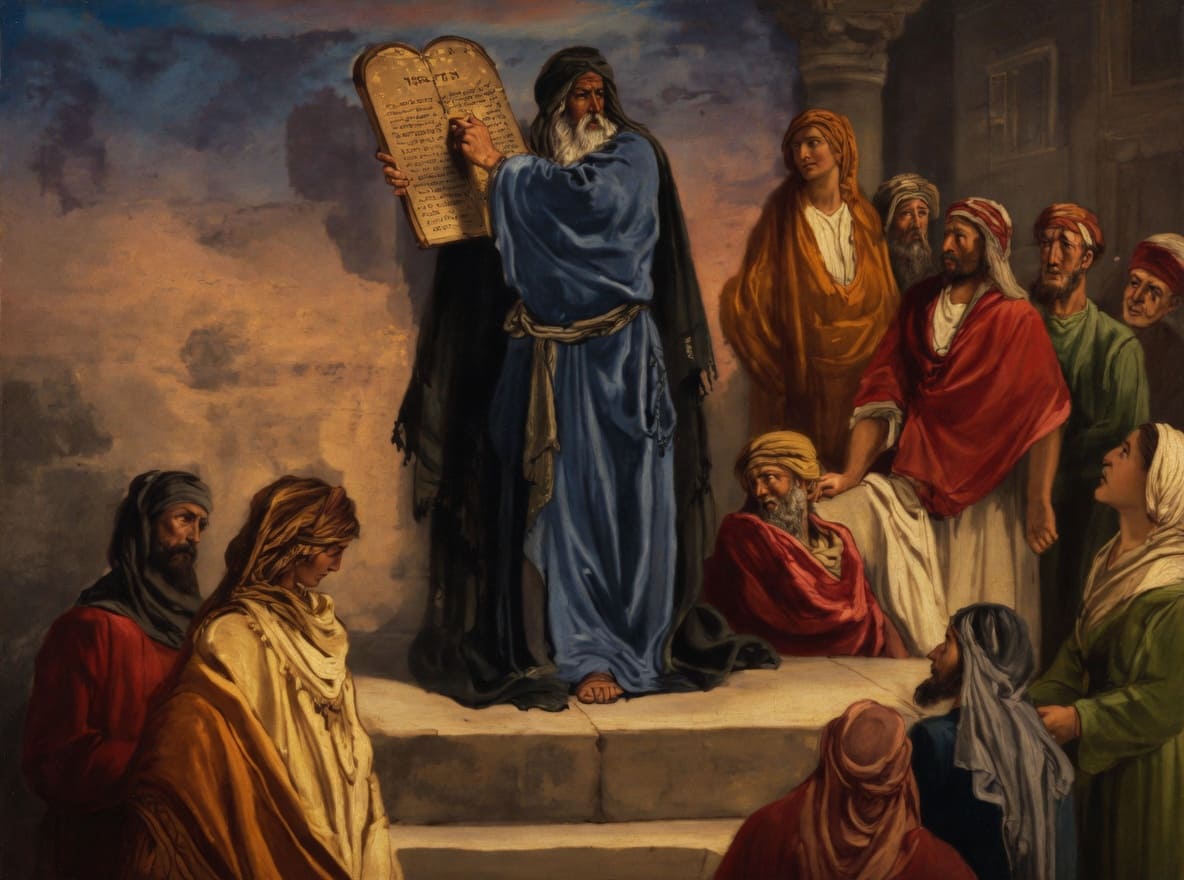
Ezra Reading The Law. “Prove all things; hold fast that which is good.” 1 Thess. 5:21.
1. Does it matter what one believes, so long as he is sincere?
“God hath from the beginning chosen you to salvation through sanctification of the Spirit and belief of the truth.” 2 Thess. 2:13.
Note.—Doctrine affects the life. Truth leads to life and God; error to death and destruction. No one would think of saying it matters not what god one worships, so long as he is sincere, any more than he would think of saying it matters not what one eats or drinks, so long as he relishes what he eats and drinks; or what road he travels, so long as he thinks he is on the right road. Sincerity is a virtue; but it is not the test of sound doctrine. God wills that we shall know the truth, and He has made provision whereby we may know what is truth.
2. Did Joshua think it immaterial what God Israel served?
“Now therefore fear the Lord, and serve Him in sincerity and in truth: and put away the gods which your fathers served on the other side of the flood and in Egypt; and serve ye the Lord. And if it seem evil unto you to serve the Lord, choose you this day whom ye will serve; whether the gods which your fathers served that were on the other side of the flood, or the gods of the Amorites, in whose land ye dwell: but as for me and my house, we will serve the Lord.” Joshua 24:14, 15.
Note.—The influence of all idolatrous worship is degrading. See Rom. 1:21-32; Numbers 15; 1 Cor. 10:20; 1 John 5:21.
3. How may we determine the truthfulness of any doctrine?
“Prove all things; hold fast that which is good.” 1 Thess. 5:21.
4. By what should we test, or prove, all doctrine?
“To the law and to the testimony: if they speak not according to this word, it is because there is no light in them.” Isa. 8:20.
5. Of what kind of doctrines should we beware?
“That we henceforth be no more children, tossed to and fro, and carried about with every wind of doctrine.” Eph. 4:14. See also Heb. 13:9.
6. What is a “wind of doctrine”?
“And the prophets shall become wind; and the word is not in them.” Jer. 5:13.
Note.—The Bible is the test of all doctrine. Whatever does not harmonize and square with this, is not to be received. “There is but one standard of the everlastingly right and the everlastingly wrong, and that is the Bible.”—T. De Witt Talmage.
7. For what is all scripture profitable?
“All scripture is given by inspiration of God, and is profitable for doctrine.” 2 Tim. 3:16.
8. What advice was given to Timothy while preparing for the gospel ministry?
“Till I come, give attendance to reading, to exhortation, to doctrine…. Take heed unto thyself, and unto the doctrine.” 1 Tim. 4:13-16.
9. What solemn charge was given him concerning his public work?
“I charge thee therefore before God, and the Lord Jesus Christ, who shall judge the quick and the dead at His appearing and His kingdom; Preach the word; … reprove, rebuke, exhort with all long-suffering and doctrine.” 2 Tim. 4:1, 2.
10. Why did the apostle say this duty was so imperative?
“For the time will come when they will not endure sound doctrine; but after their own lusts shall they heap to themselves teachers, having itching ears; and they shall turn away their ears from the truth, and shall be turned unto fables.” Verses 3, 4.
11. What similar instruction was given to Titus?
“But speak thou the things which become sound doctrine: … in all things showing thyself a pattern of good works: in doctrine showing uncorruptness, gravity, sincerity.” Titus 2:1-7.
12. What will sound doctrine enable the faithful teacher to do?
“Holding fast the faithful word as he hath been taught, that he may be able by sound doctrine both to exhort and to convince the gainsayers.” Titus 1:9.
13. What danger attends the teaching of false doctrine?
“Who concerning the truth have erred, saying that the resurrection is past already; and overthrow the faith of some.” 2 Tim. 2:18.
14. Who are the disciples of Jesus, and what gracious work does the truth do for those who receive it?
“If ye continue in My word, then are ye My disciples indeed; and ye shall know the truth, and the truth shall make you free.” John 8:31, 32.
15. Through what are they to be sanctified?
“Sanctify them through Thy truth: Thy word is truth.” John 17:17.
16. What kind of worship results from false teaching?
“But in vain they do worship Me, teaching for doctrines the commandments of men.” Matt. 15:9.
17. Can we close our ears to truth, and remain innocent before God?
“He that turneth away his ear from hearing the law, even his prayer shall be abomination.” Prov. 28:9.
18. What did Christ say of those who will to do God’s will?
“If any man willeth to do His will, he shall know of the teaching, whether it be of God, or whether I speak from Myself.” John 7:17, R. V. See also Ps. 25: 9; John 8:12.
19. What will God allow to come to those who reject truth?
“Because they receive not the love of the truth, that they might be saved. And for this cause God shall send them strong delusion, that they should believe a lie: that they all might be damned who believed not the truth, but had pleasure in unrighteousness.” 2 Thess. 2:10-12.
20. By what doctrines are some to be misled in the last days?
“Now the Spirit speaketh expressly, that in the latter times some shall depart from the faith, giving heed to seducing spirits, and doctrines of devils.” 1 Tim. 4:1. See 2 Peter 2:1.
21. What fate awaits blind teachers and their followers?
“Let them alone: they be blind leaders of the blind. And if the blind lead the blind, both shall fall into the ditch.” Matt. 15:14.
22. To whom will the gates of the heavenly city finally be opened?
“Open ye the gates, that the righteous nation which keepeth the truth may enter in.” Isa. 26:2. See also Rev. 22:14.
Present Truth
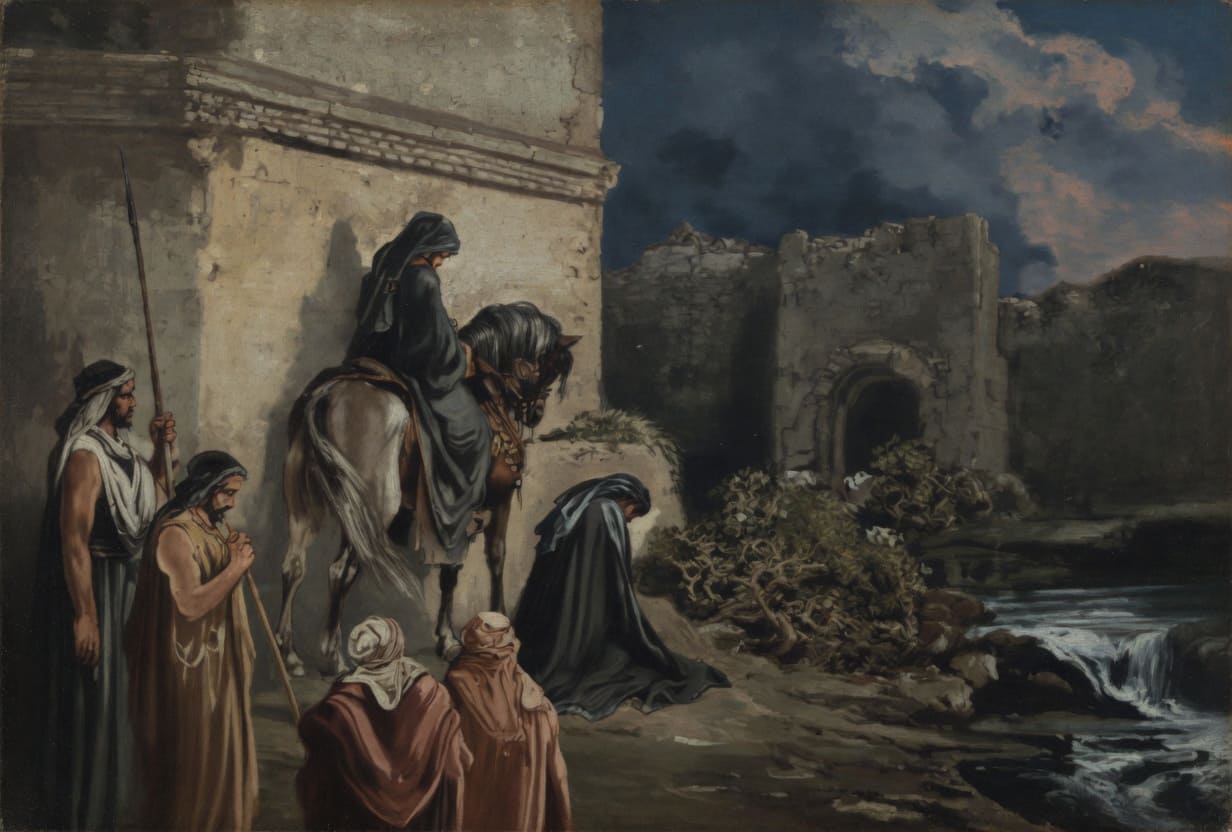
Nehemiah Viewing The Ruins Of Jerusalem. “And they said, Let us rise up and build.” Neh. 2:18.
1. By what are men sanctified?
“Sanctify them through Thy truth: Thy word is truth.” John 17:17.
2. To what knowledge would God have all men come?
“Who will have all men to be saved, and to come unto the knowledge of the truth.” 1 Tim. 2:4.
3. After receiving a knowledge of the truth, what must one do in order to be sanctified by it?
“God hath from the beginning chosen you to salvation through sanctification of the Spirit and belief of the truth.” 2 Thess. 2:13.
4. And what besides a mere belief in the truth is necessary?
“Elect according to the foreknowledge of God the Father, through sanctification of the Spirit, unto obedience.” 1 Peter 1:2.
5. What effect does obedience to the truth have?
“Seeing ye have purified your souls in obeying the truth through the Spirit.” Verse 22.
6. How should the truth ever be cherished?
“Buy the truth, and sell it not.” Prov. 23:23.
NOTE.—That is, buy the truth at whatever sacrifice or cost, and sell it under no consideration.
7. Does the Bible recognize what may be called “present truth”?
“Wherefore I will not be negligent to put you always in remembrance of these things, though ye know them, and be established in the present truth.” 2 Peter 1:12.
NOTE.—Some truths are applicable in all ages, and are therefore present truth for every generation; others are of a special character, and are applicable to only one generation. They are none the less important, however, because of this; for upon their acceptance or rejection depends the salvation or loss of the people of that generation. Of this kind was Noah’s message of a coming flood. To the generation to whom it was preached that message was present truth; to later generations it has been past truth, and not a present, testing message. Similarly, had the first advent message of John the Baptist, of the Messiah at hand, been proclaimed in the generation either before or after John’s time, it would not have been applicable—would not have been present truth. The people of the generation before would not have lived to see it fulfilled, and to those living after, it would have been wrongly timed. Not so with general truths, such as love, faith, hope, repentance, obedience, justice, and mercy. These are always in season, and of a saving nature at all times. Present truths, however, always include all these, and hence are saving in character, and of vital importance.
8. What was the special message for Noah’s day?
“And God said unto Noah, The end of all flesh is come before Me; for the earth is filled with violence through them; and, behold, I will destroy them with the earth. Make thee an ark of gopher wood.” Genesis 6:13, 14.
9. How did Noah show his faith in this message?
“By faith Noah, being warned of God of things not seen as yet, moved with fear, prepared an ark to the saving of his house; by the which he condemned the world, and became heir of the righteousness which is by faith.” Heb. 11:7.
10. How many were saved in the ark?
“The long-suffering of God waited in the days of Noah, while the ark was a preparing, wherein few, that is, eight souls were saved by water.” 1 Peter 3:20.
NOTE.—Doubtless many who were lost in the flood held, in a nominal way, to faith in God; but the test as to the genuineness of this came with Noah’s special message; and the difference between their faith and his was made plain when they rejected the saving truth for that time,—the warning message concerning the coming flood.
11. What special message was given to Jonah for Nineveh?
“So Jonah arose, and went unto Nineveh, according to the word of the Lord…. And Jonah began to enter into the city a day’s journey, and he cried, and said, Yet forty days, and Nineveh shall be overthrown.” Jonah 3:3, 4.
12. What saved the people from the predicted overthrow?
“So the people of Nineveh believed God, and proclaimed a fast, and put on sackcloth, from the greatest of them even to the least of them…. And God saw their works, that they turned from their evil way; and God repented of the evil, that He had said that He would do unto them; and He did it not.” Verses 5-10. See Jer. 18:7-10.
NOTE.—So likewise would God have spared the antediluvian world had they received Noah’s message, and turned from their evil ways.
13. What was the special mission of John the Baptist?
“There was a man sent from God, whose name was John. The same came for a witness, to bear witness of the Light, that all men through Him might believe.” John 1:6, 7.
14. What answer did he return when asked concerning his mission?
“He said, I am the voice of one crying in the wilderness, Make straight the way of the Lord, as said the prophet Esaias.” Verse 23.
15. What did Christ say of those who rejected John’s message?
“But the Pharisees and lawyers rejected the counsel of God against themselves, being not baptized of him.” Luke 7:30.
16. What did those who were baptized of John?
“And all the people that heard Him, and the publicans, justified God, being baptized with the baptism of John.” Verse 29.
NOTE.—That is, they honored God by this act, which showed their faith in His truth for that time.
17. Did God’s chosen people receive Christ when He came?
“He came unto His own, and His own received Him not.” John 1:11.
18. What reason did they give for not receiving Him?
“We know that God spake unto Moses: as for this fellow, we know not from whence He is.” John 9:29.
NOTE.—That was the trouble; they had no faith in anything new. They knew that God spoke by Moses: it required little faith to believe that. They felt perfectly safe in accepting him, for everything had demonstrated that he was sent of God. All could see that. But here was One whom, although He had come in fulfilment of the prophecies of Moses and the prophets as their long-looked-for Messiah, they felt there was a risk in accepting, because they did not understand the prophecies relating to Him, and time had not worked out to their satisfaction the truthfulness of His claims. It required too much faith, as against their desire to walk by sight, to accept Christ. It also called for a change of views in some things, and a reformation in life. So they rejected Him. They believed in the flood, faith in which had saved Noah; they believed in Elijah also, and professed faith in all the prophets; but when it came to this special truth for their time, they refused to accept it. Thus it has been in all ages, and thus we may expect it to continue to the end.
19. How did Christ say those who rejected Him reasoned?
“Ye build the tombs of the prophets, and garnish the sepulchers of the righteous, and say, If we had been in the days of our fathers, we would not have been partakers with them in the blood of the prophets.” Matt. 23:29, 30.
NOTE.—While they condemned the action of their fathers in slaying the prophets whom God had sent with messages of reproof and warning applicable to those times, they soon filled up the measure of the iniquity of their fathers by putting to death the Son of God. This showed that they would have done as did their fathers had they lived in their day. Thus we see that present truths are testing truths.
20. What was the result of the Jews’ not accepting Christ?
“And when He was come near, He beheld the city, and wept over it, saying, If thou hadst known, even thou, at least in this thy day, the things which belong unto thy peace! but now they are hid from thine eyes.” Luke 19:41, 42. “Behold, your house is left unto you desolate.” Matt. 23:38.
21. Is there to be a special message for the last days?
“Therefore be ye also ready: for in such an hour as ye think not the Son of man cometh. Who then is a faithful and wise servant, whom his Lord hath made ruler over his household, to give them meat in due season?” Matt. 24:44, 45.
NOTE.—In the last days a message will go forth which will be “meat in due season” to the people. This must be the warning concerning the Lord’s soon coming, and the preparation necessary to meet Him. Because such a message was not always preached, is no evidence that it is not now to be proclaimed. In his farewell address to the Pilgrim Fathers on their departure from Holland for America, John Robinson said: “The Lord knoweth whether I shall ever see your faces more; but whether the Lord hath appointed that or not, I charge you before God and His blessed angels to follow me no farther than I have followed Christ. If God should reveal anything to you by any other instrument of His, be as ready to receive it as you ever were to receive any truth by my ministry; for I am very confident that the Lord hath more truth and light yet to break forth out of His Holy Word. For my part, I cannot sufficiently bewail the condition of the Reformed churches, who are come to a period in religion, and will go no farther than the instruments of their reformation. The Lutherans cannot be drawn to go any farther than what Luther saw; and the Calvinists, you see, stick fast where they were left by that great man of God, who yet saw not all things. This is a misery much to be lamented; for though they were burning and shining lights in their time, yet they penetrated not into the whole counsel of God, but were they now living, would be as willing to embrace further light as that which they first received.”
22. What does Christ say of that servant who, when He comes, is found giving “meat in due season”?
“Blessed is that servant, whom his lord when he cometh shall find so doing.” Verse 46.
NOTE.—The coming of Christ in glory has been the hope of the faithful in all ages.
Luther declared: “I persuade myself verily, that the day of judgment will not be absent full three hundred years. God will not, cannot, suffer this wicked world much longer. The great day is drawing near in which the kingdom of abominations shall be overthrown.”
Melanchthon said: “This aged world is not far from its end.”
Calvin bade Christians “not to hesitate, ardently desiring the day of Christ’s coming as of all events most auspicious;” and declared that “the whole human family of the faithful will keep in view that day.” “We must hunger after Christ, we must seek, contemplate,” he adds, “till the dawning of that great day, when our Lord will fully manifest the glory of His kingdom.”
Said Knox, the Scotch Reformer: “Has not our Lord Jesus carried up our flesh into heaven? and shall He not return? We know that He shall return, and that with expedition.”
Ridley and Latimer, who laid down their lives for the truth, looked in faith for the Lord’s coming. Ridley wrote: “The world without doubt—this I do believe, and therefore I say it—draws to an end.”
Said Baxter: “The thoughts of the coming of the Lord are most sweet and joyful to me. It is the work of faith and the character of His saints to love His appearing, and to look for that blessed hope.”
23. What will be the burden of the closing gospel message?
“Fear God, and give glory to Him; for the hour of His judgment is come: and worship Him that made heaven, and earth, and the sea, and the fountains of waters…. Babylon is fallen, is fallen…. If any man worship the beast and his image, and receive his mark in his forehead, or in his hand, the same shall drink of the wine of the wrath of God.” Rev. 14:7-10.
24. How are those described who accept this message?
“Here is the patience of the saints: here are they that keep the commandments of God, and the faith of Jesus.” Verse 12.
25. How earnestly is this work to be prosecuted?
“And the lord said unto the servant, Go out into the highways and hedges, and compel them to come in, that my house may be filled.” Luke 14:23.
NOTE.—This work is now going on. In every part of the world the sound of this closing gospel message is being heard, and the people are being urged to accept it, and to prepare for Christ’s coming and kingdom. See readings on pages 251-263.
The Obedience Of Faith
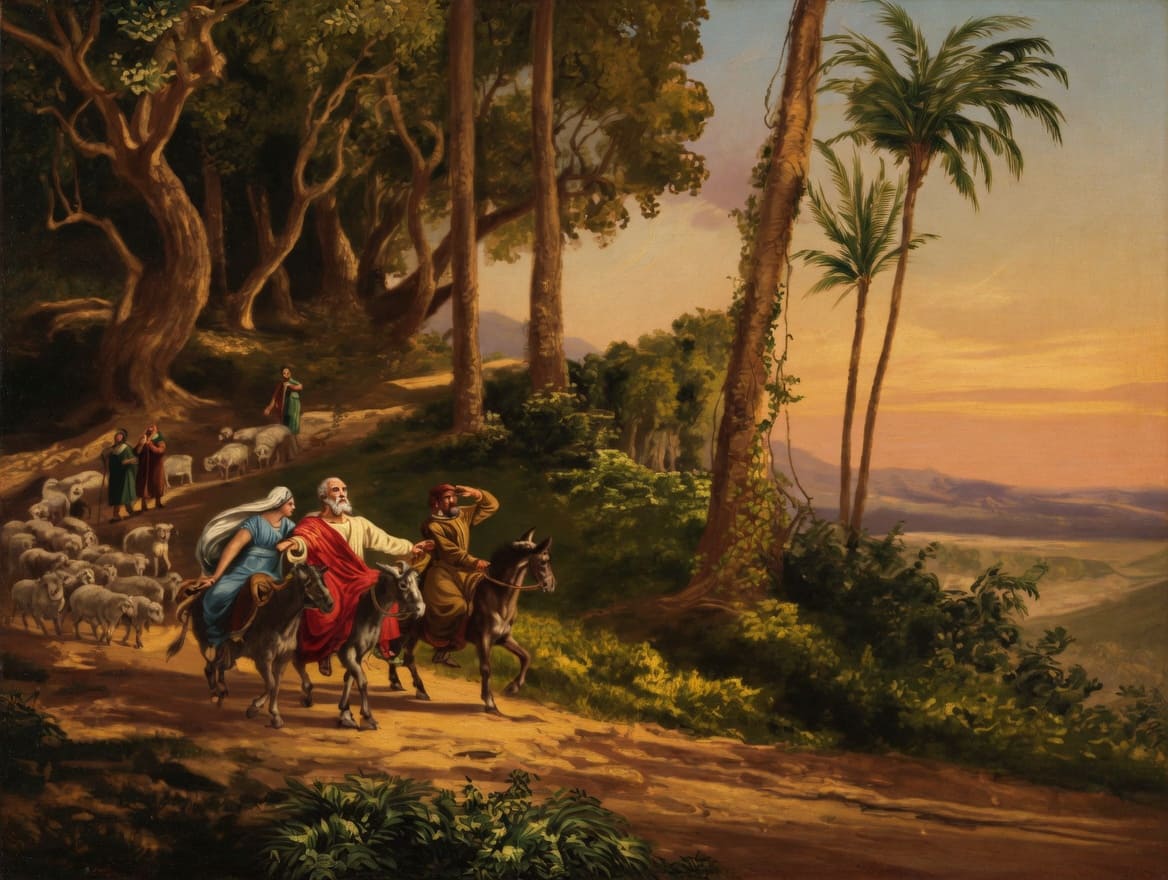
Abraham Entering The Promised Land. “By faith Abraham, when he was called to go out … obeyed.” Heb. 11:8.
1. What did the Lord command Abraham to do?
“Now the Lord had said unto Abram, Get thee out of thy country, and from thy kindred, and from thy father’s house, unto a land that I will show thee.” Gen. 12:1.
2. How did Abraham respond to this command?
“So Abram departed, as the Lord had spoken unto him; and Lot went with him: and Abram was seventy and five years old when he departed out of Haran.” Verse 4.
3. Of what was Abraham’s obedience the fruit?
“By faith Abraham, when he was called, obeyed to go out unto a place which he was to receive for an inheritance; and he went out, not knowing whether he went.” Heb. 11:8, R. V.
4. What command did the Lord later give to Abraham?
“And He said, Take now thy son, thine only son Isaac, whom thou lovest, and get thee into the land of Moriah; and offer him there for a burnt offering upon one of the mountains which I will tell thee of.” Gen. 22:2.
5. Upon what ground were the previous promises then renewed to Abraham?
“And said, By Myself have I sworn, saith the Lord, for because thou hast done this thing, and hast not withheld thy son, thine only son: that in blessing I will bless thee, and in multiplying I will multiply thy seed as the stars of the heaven, and as the sand which is upon the seashore; and thy seed shall possess the gate of his enemies; and in thy seed shall all the nations of the world be blessed; because thou hast obeyed My voice.” Verses 16-18.
6. What enabled Abraham to endure the test?
“By faith Abraham, when he was tried, offered up Isaac: and he that had received the promises offered up his only begotten son.” Heb. 11:17.
7. Of what were the works of Abraham an evidence?
“Was not Abraham our father justified by works, when he had offered Isaac his son upon the altar?” James 2:21.
8. By his works what was shown to be perfect?
“Seest thou how faith wrought with his works, and by works was faith made perfect?” Verse 22.
9. In what statement of the scripture was Abraham’s obedience really implied?
“And the scripture was fulfilled which saith, Abraham believed God, and it was imputed unto him for righteousness: and he was called the Friend of God.” Verse 23.
10. What kind of faith avails with God?
“For in Jesus Christ neither circumcision availeth anything, nor uncircumcision; but faith which worketh by love.” Gal. 5:6.
Note.—The faith which justifies is the faith which works. Those who say, and do not, are not men of faith. The obedience which is pleasing to God is the fruit of that faith which takes God at His word, and submits to the working of His power, being fully assured that He has promised He is able also to perform. This is the faith which is reckoned for righteousness. See Rom. 4:21, 22.
11. For what purpose is the mystery of the gospel made manifest?
“But now [the mystery] is made manifest, and by the scriptures of the prophets, according to the commandment of the everlasting God, made known to all nations for the obedience of faith.” Rom. 16:26.
12. For what purpose is the grace of Christ received?
“Through whom we received grace and apostleship, unto obedience of faith among all the nations, for His name’s sake.” Rom. 1:5, R. V.
13. What example of obedience has Christ set for us?
“And being found in fashion as a man, He humbled Himself, and became obedient unto death, even the death of the cross.” Phil. 2:8.
14. At what cost did even He learn the lesson of obedience?
“Though He were a Son, yet learned He obedience by the things which He suffered.” Heb. 5:8.
15. To whom did Christ become the author of salvation?
“And being made perfect, He became the author of eternal salvation unto all them that obey Him.” Verse 9.
16. How complete should this obedience be?
“Casting down imaginations, and every high thing that exalteth itself against the knowledge of God, and bringing into captivity every thought to the obedience of Christ.” 2 Cor. 10:5.
17. What effect did the preaching of the apostles have upon the hearers?
“And the word of God increased; and the number of the disciples multiplied in Jerusalem greatly; and a great company of the priests were obedient to the faith.” Acts 6:7.
18. What effect did the preaching of the apostle Paul have upon the Gentiles?
“For I will not dare to speak of any of those things which Christ hath not wrought by me, to make the Gentiles obedient, by word and deed.” Rom. 15:18.
19. How highly does God regard obedience?
“And Samuel said, Hath the Lord as great delight in burnt offerings and sacrifices, as in obeying the voice of the Lord? Behold, to obey is better than sacrifice, and to hearken than the fat of rams.” 1 Sam. 15:22.
20. With what sins are rebellion and stubbornness classed?
“For rebellion is as the sin of witchcraft, and stubbornness is as iniquity and idolatry. Because thou hast rejected the word of the Lord, He hath also rejected thee from being king.” Verse 23.
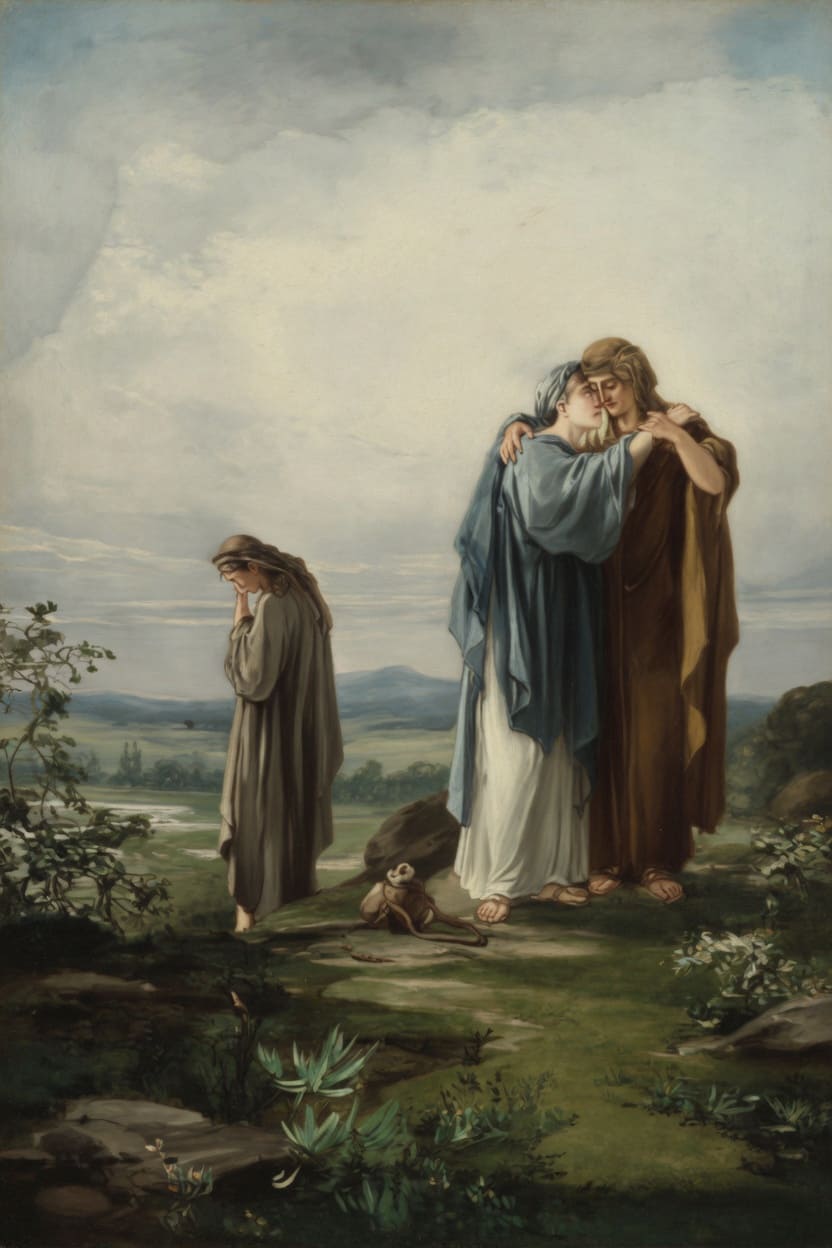
Ruth And Naomi. “Thy people shall be my people, and thy God my God.” Ruth 1:16.
21. Whose voice had more weight with Saul than had the commandment of God?
“And Saul said unto Samuel, I have sinned: for I have transgressed the commandment of the Lord, and thy words: because I feared the people, and obeyed their voice.” Verse 24.
22. What charge did Jesus bring against the Pharisees?
“And He said unto them, Full well ye reject the commandment of God, that ye may keep your own tradition.” Mark 7:9.
NOTE.—Human tradition is simply the voice of man preserved in the church. To follow the traditions of men instead of obeying the commandments of God is to repeat the sin of Saul.
23. What will be the fate of those who do not obey the gospel of Christ?
“And to you who are troubled rest with us, when the Lord Jesus shall be revealed from heaven with His mighty angels, in flaming fire taking vengeance on them that know not God, and that obey not the gospel of our Lord Jesus Christ.” 2 Thess. 1:7, 8.
24. What condition is attained in obeying the truth?
“Seeing ye have purified your souls in obeying the truth through the Spirit unto unfeigned love of the brethren, see that ye love one another with a pure heart fervently.” 1 Peter 1:22.
25. What promise is made to the obedient?
“If ye be willing and obedient, ye shall eat the good of the land.” Isa. 1:19.
26. Whose example are we urged to imitate?
“That ye be not slothful, but followers of them who through faith and patience inherit the promises.” Heb. 6:12.